Bootloader unlocking is still possible for Huawei and Honor devices, but it’ll cost you - XDA-Developers
Bootloader unlocking is still possible for Huawei and Honor devices, but it’ll cost you - XDA-Developers |
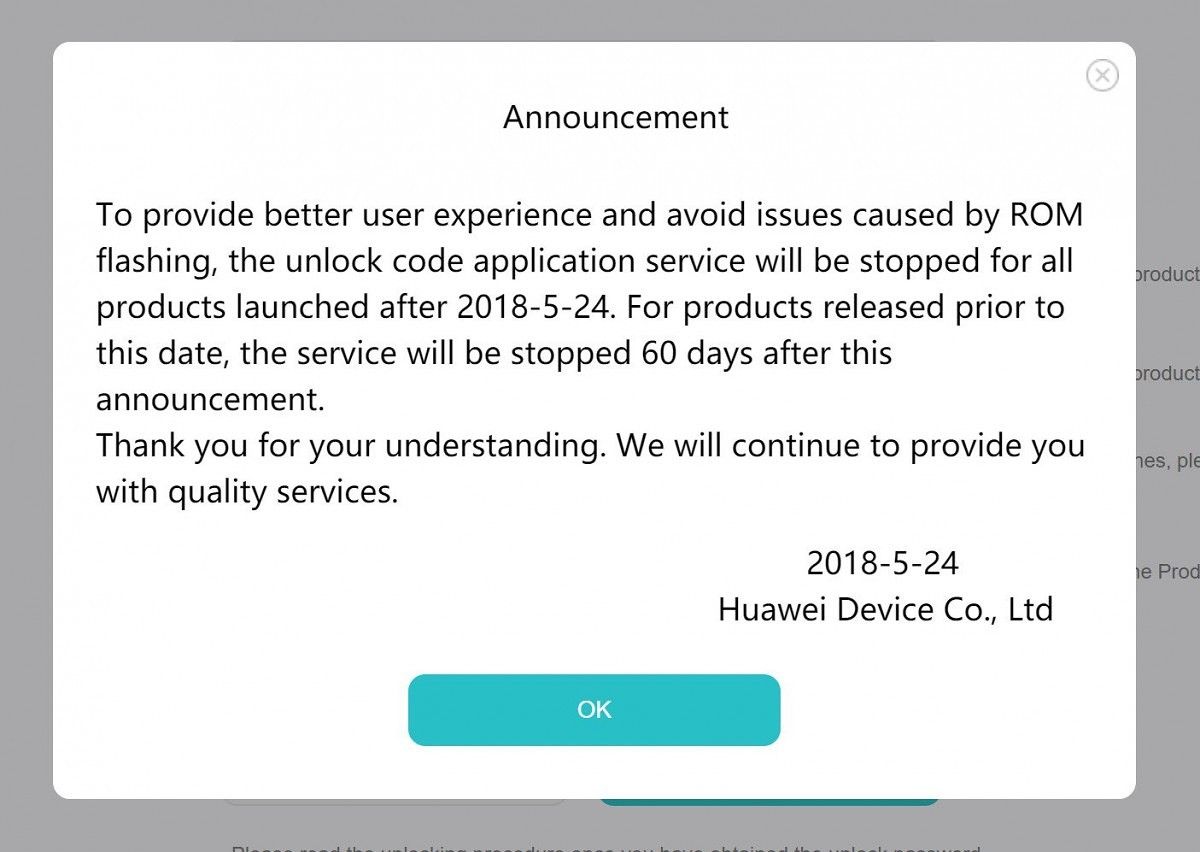
| Posted: 15 Nov 2018 12:00 AM PST Modding our smartphones and tablets is what XDA is all about. Our site is home to the largest forums for Android enthusiasts who love to tinker with their devices, which sometimes causes clashes with the companies that make these devices. Some companies like Google and OnePlus are friendly towards modders, while many others simply turn a blind eye towards our community. Other companies, however, crack down on the ability to modify the software on their devices because they feel threatened by third-party resellers harming their reputations. Huawei, for example, recently stopped providing bootloader unlock codes for all their smartphones and tablets, sparking a backlash from the community. Although Honor, Huawei's subbrand, re-opened bootloader unlocking on a limited trial, there's only one way to unlock the bootloader of your Huawei or Honor device moving forward—but it'll cost you. For those of you who are unaware, the bootloader is the code that's responsible for initiating the operating system and its kernel on the device. Normally, the bootloader will only load boot images that are signed by the device maker. With an unlocked bootloader, you can install boot images that aren't signed by the device maker. That includes custom images needed to boot an AOSP-based ROM, boot images patched to support Magisk root, and more. Unlocking the bootloader on smartphones from Google, OnePlus, Essential, Razer, and a few other device makers is as simple as connecting your phone to a PC, enabling "OEM unlocking" in Developer Options, and then entering a few fastboot (fastboot is a protocol for sending commands from a PC to the bootloader of your device) commands while your phone is in the bootloader menu. Other devices require that you have a device-specific bootloader unlock code before you can unlock the bootloader. Usually, requesting a bootloader unlock code involves filling out a form with your IMEI, account information, and other details. Huawei used to provide such a form, but they shut it down in late July. That means there's no longer an official way to get the bootloader unlock code for your Huawei or Honor smartphone or tablet. Nobody has yet figured out how these bootloader unlock codes are generated, so it's impossible to generate one yourself. Most likely, these codes are created for every device in the factory, and the Huawei form simply looked up the code for your device from an internal database. Thus, short of an exploit or a sudden 180 from Huawei, don't look to Huawei or Honor products if you're dead set on modding them with custom kernels, custom ROMs, Magisk, etc. If, however, you already own a Huawei or Honor device and you're really desperate to unlock the bootloader for whatever reason, there's one last resort: third-party paid services. Unofficially unlocking the Bootloader of Huawei and Honor SmartphonesYou may have heard of a service called FunkyHuawei.club in the past. We've leaked information on the Honor View 10, Huawei Mate 10 Pro, Huawei Mate 20, and many other devices in the past thanks to the early access to firmware builds that they provide. FunkyHuawei also has services for unbricking or rebranding Huawei and Honor devices, but their most recently added service is bootloader unlocking. It generates bootloader unlock codes for all Huawei and Honor devices—even recently released devices like the Honor Note 10, Huawei Mate 20, and Honor Magic 2. Other paid services like DC-Unlocker stopped working on recent devices, but you can also try it if you own an older Huawei or Honor device. I've personally only tried FunkyHuawei's bootloader unlocking service on my Honor Magic 2, and it took minutes for the unlock code to arrive in my inbox after I sent my IMEI and model number. I haven't tried DC-Unlocker yet, but I've heard that it works on devices like the Huawei MediaPad M5. (Disclaimer: FunkyHuawei provided me a free code so I can verify his service actually works.)
As for the price, it's $55 for a single unlock code from FunkyHuawei. Yeah, it's quite pricey. DC-Unlocker is cheaper, but it doesn't work on newer models. I don't believe that the availability of bootloader unlock codes from third-parties will salvage the custom ROM community since few developers will want to bother with Huawei or Honor devices going forward. However, if you just want to install Magisk or try a Project Treble GSI, then you'll have to pay up because services like this are the only way to unlock the bootloader that we're aware of. FunkyHuawei tells me they also sell devices imported from Hong Kong that are either pre-rooted or come with a bootloader unlock code in case you want to go that route. Again, you're going to be paying more than what you would normally pay for the device, but the closing of Huawei's bootloader unlock form leaves you with few choices. Want more posts like this delivered to your inbox? Enter your email to be subscribed to our newsletter.  |
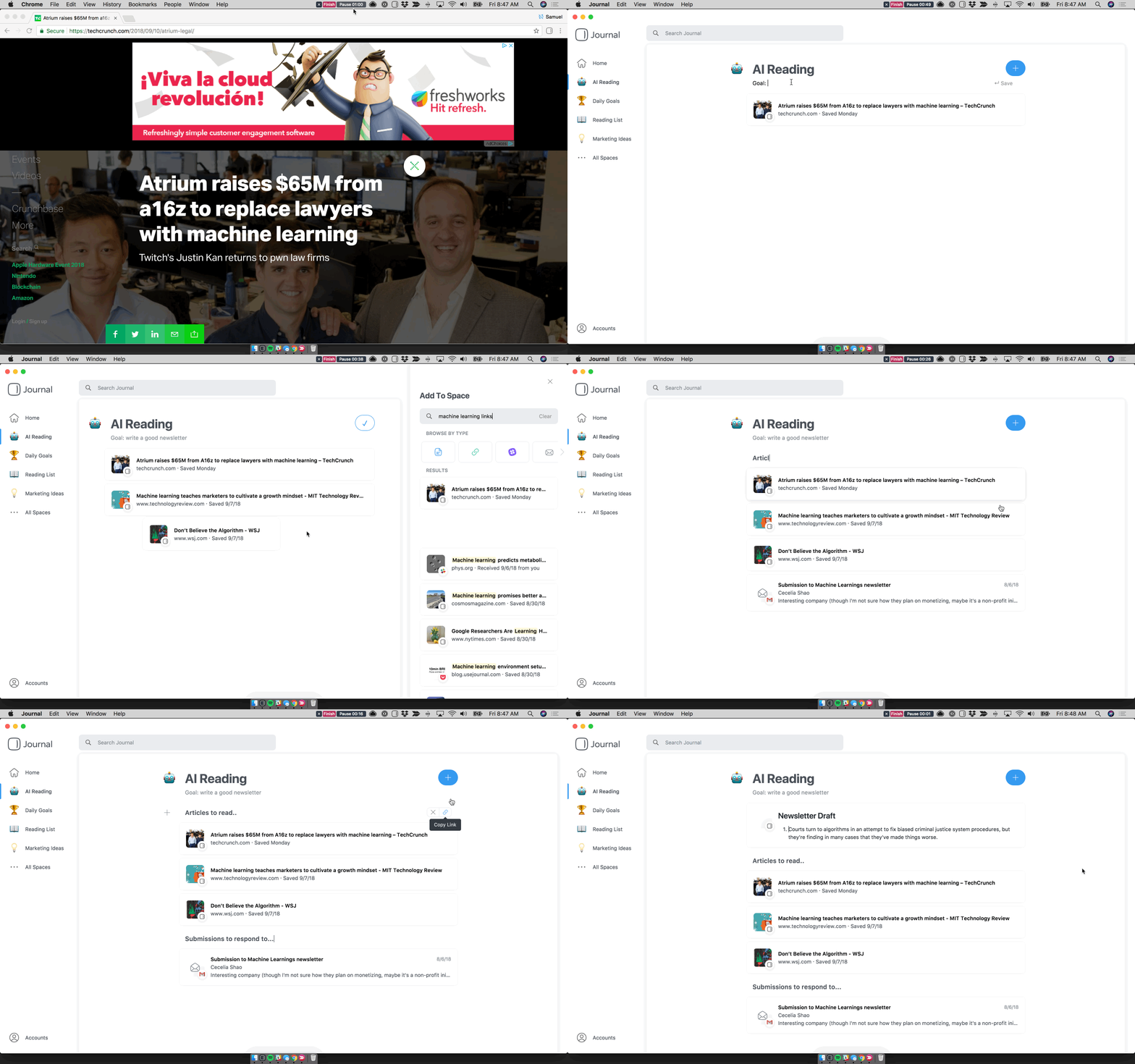
| Journal raises $1.5 million to bring Google-like search to your personal life - TechCrunch Posted: 16 Oct 2018 12:00 AM PDT In today's world of Slack, email and a gazillion other web apps and services, it's become increasingly hard to search for information. Did your boss Slack you or email you that information about your bonus? Or did they share it via a Google Doc? Who knows? Clearly not you, but Journal knows. Journal, a machine learning and natural language processing-powered platform designed to search across all your web services and tools, today announced a $1.5 million seed round led by Social Capital. Since receiving the funding about a year ago, Journal has been able to launch a beta community of users. Today, Journal is publicly launching its Mac app, web app and Chrome extension. "We're passionate about helping people use information effectively," Journal co-founder and CEO Samiur Rahman told TechCrunch. "In this case, we want to help people manage their knowledge. So we want to help individuals to leverage all of the places that they have information right now." It was that thesis that led Rahman and his team to land on wanting to build a suite of tools that "acts as a second brain for people. That's obviously a long way away but that's what our long-term vision is."
Based on the demo Rahman showed me, Journal looks pretty darn useful. I had an opportunity to install it, but I was hesitant to do so. That's because Journal requires viewing permissions to your email, apps and other services with which you sync Journal. That's scary for a couple of reasons — the main one being privacy. For example, what happens if Journal gets hacked? Or if the government requests data from Journal? Well, Journal uses zero-knowledge encryption that ensures Journal employees can't read or decrypt the information of the user. Here's a bit more information on how Journal handles security:
I'm not a security expert, so I asked my colleague, TC Security Editor Zack Whittaker, for some insight. He told me Rahman's explanation makes sense, further explaining that what Journal does is essentially split the private keys needed to access your data. Whittaker said that's smart, but that he's more concerned about general trust. Journal has access to a treasure trove of data — much of which would be very valuable to advertisers. Right now, advertising is not part of Journal's revenue plans, but that could change. "I can't say for certainty that we won't, but I think ad-based revenue ends up creating some really bad incentives, especially when you've got all this really private data about people and their usage patterns. The very likely route is that we end up going through companies that pay for teams to use." As with most tech products these days, it comes down to how much do you trust the company and how much do you care about your data? And depending on who you are, you may have a stronger threat model — that is, what threats you face based on who you are. Black communities, for example, are at a greater risk of surveillance by the government than white communities. So you adjust your behavior based on your personal threats. Privacy concerns aside, Journal looks like a really useful product. But we'll see if I get around to setting it up.  |


| You are subscribed to email updates from "best encryption software,google phone encryption,huawei p8 encryption" - Google News. To stop receiving these emails, you may unsubscribe now. | Email delivery powered by Google |
| Google, 1600 Amphitheatre Parkway, Mountain View, CA 94043, United States | |


Comments
Post a Comment