Dallas Invents: 171 Patents Granted for Week of April 7 - dallasinnovates.com
Dallas Invents: 171 Patents Granted for Week of April 7 - dallasinnovates.com |
| Dallas Invents: 171 Patents Granted for Week of April 7 - dallasinnovates.com Posted: 21 Apr 2020 12:00 AM PDT
171 patents granted Ranked No. 9 in patent production out of 250 metros NO. OF PATENTS BY CLASSIFICATION TOP LOCAL ASSIGNEES (NO. OF PATENTS) Texas Instruments Inc. (Dallas) 22 UNASSIGNED 16 TOP LOCAL INVENTORS (NO. OF PATENTS) David Veness (Fort Worth) 3 SPEED: APPLICATION TO ISSUE (NO. OF DAYS)
Don't miss Dallas Invents: Sign up for the Dallas Innovates e-newsletter. Patent information is provided by Joe Chiarella, founder of patent analytics company Patent Index and publisher of The Inventiveness Index. For additional details on the patents granted below, search the USPTO Patent Full-Text and Image Database. UTILITY PATENTSH U M A N N E C E S S I T I E S Kennel latching mechanism Inventor(s): David Veness (Fort Worth, TX) Abstract: A latching mechanism for a kennel includes a first horizontally extending latching bar, a second horizontally extending latching bar, the second bar extending substantially parallel to the first horizontally extending latching bar, and a vertically extending handle, the handle being coupled to the first horizontally extending latching bar at a first end and being coupled to the second horizontally extending latching bar at a second end, and being configured such that when moved in the vertical direction, the handle rotates the first and second horizontally extending latching bars. [A01K] ANIMAL HUSBANDRY; CARE OF BIRDS, FISHES, INSECTS; FISHING; REARING OR BREEDING ANIMALS, NOT OTHERWISE PROVIDED FOR; NEW BREEDS OF ANIMALS Animal food dispenser Inventor(s): David Simon (Lakeland, FL), David Veness (Fort Worth, TX), Nicholas Baker (Fort Worth, TX) Abstract: An animal food dispenser, includes a base portion and a roller portion. The base portion has first and second upwardly extending members. The roller portion has an opening, and is configured to be held by the upwardly extending members such that the roller portion is capable of freely rotating and dispensing food through the opening. [A01K] ANIMAL HUSBANDRY; CARE OF BIRDS, FISHES, INSECTS; FISHING; REARING OR BREEDING ANIMALS, NOT OTHERWISE PROVIDED FOR; NEW BREEDS OF ANIMALS Baffle for an animal feeding device Inventor(s): David Veness (Fort Worth, TX) Abstract: An animal feeding device including a hopper, a feeding base, and a baffle plate with an upwardly facing surface having an opening therein, an upwardly extending wall, and at least one projection extending in a direction opposite the upwardly extending wall. The baffle plate is included in an animal feeding device to enable food to pass through the opening, and support at least a portion of food in the animal feeder on the upwardly facing surface. [A01K] ANIMAL HUSBANDRY; CARE OF BIRDS, FISHES, INSECTS; FISHING; REARING OR BREEDING ANIMALS, NOT OTHERWISE PROVIDED FOR; NEW BREEDS OF ANIMALS Pet toy with telescoping wand with retractable cord apparatus Inventor(s): Jack William Renforth (Azle, TX) Abstract: A pet toy includes a handle, a cord, a retractable cord apparatus coupled with a first end of the cord and being structured to retract the cord into itself after the cord has been pulled out, an attachment mechanism coupled to the second end of the cord and structured to releasably couple to an object, and a telescopic pole having a first end coupled to the handle and a second end coupled to the retractable cord apparatus. [A01K] ANIMAL HUSBANDRY; CARE OF BIRDS, FISHES, INSECTS; FISHING; REARING OR BREEDING ANIMALS, NOT OTHERWISE PROVIDED FOR; NEW BREEDS OF ANIMALS Holiday ornament assembly Inventor(s): Seerwan Hameed (Lewisville, TX) Abstract: A holiday ornament assembly for hanging includes a bell body that has an upper wall and peripheral wall that is attached to and extends downwardly therefrom. The peripheral wall has a bottom edge creating an opening into the bell body. A pendulum is pivotally attached to the bell body. The pendulum has an upper end and a lower end. The upper end extends through an aperture in the upper wall. A bob is attached to the lower end and positioned within the bell body. A housing is comprised of a top wall and a perimeter wall that is attached to the top wall and extends downwardly therefrom and attached to the upper wall. A hook is attached to and extends outwardly from the top wall. A drive assembly is mounted in the housing and pivots the pendulum to strike the bell body emitting a ringing sound. [A47G] HOUSEHOLD OR TABLE EQUIPMENT (book-ends A47B 65/00; knives B26B) Liquid extraction apparatus Inventor(s): Christopher Terpstra (Frisco, TX), Ernest Matthew Chavana, Jr. (Villa Ridge, MO), Jan Valentic (Plano, TX), Richard Foster (Powell, OH), Stanley Anderson (Fenton, MO) Abstract: An apparatus includes a body, a first tank and a second tank. The body includes a first fluid coupling and a first air passage. The first tank includes a first vessel configured to accommodate a fluid and a second fluid coupling communicatively coupled with the first fluid coupling. The second tank includes a second vessel separated from the first vessel and a second air passage communicatively coupled with the first air passage. The apparatus also includes a tank base over the body. The tank base includes a first tank seat configured to accommodate the first tank and a second tank seat configured to accommodate the second tank. The tank base is configured to be separated from the body with at least one of the first tank in the first tank seat or the second tank in the second tank seat. [A47L] DOMESTIC WASHING OR CLEANING (brushes A46B; cleaning quantities of bottles or of other hollow articles of one kind B08B 9/00; laundry D06F); SUCTION CLEANERS IN GENERAL (cleaning in general B08) Emotion representative image to derive health rating Inventor(s): Yan Zhou (Santa Clara, CA) Abstract: A computer implemented method of generating a personalized health rating for a person uses one or more processors. The one or more processors execute instructions to perform the method including obtaining, by the one or more processors, measured data associated with the person, obtaining, by the one or more processors, a facial image of the person, extracting, by the one or more processors, emotional based features from the facial image, using a deep learning model trained on emotion labeled facial images to associate an emotional state with the extracted features to generate emotional data, and fusing, by the one or more processors, the measured data with the emotional data to generate the personalized health rating. [A61B] DIAGNOSIS; SURGERY; IDENTIFICATION (analysing biological material G01N, e.g. G01N 33/48) Systems and methods for portable monitoring of incentive spirometry Inventor(s): Farid Farahmand (Plano, TX), Foad Farahmand (Plano, TX) Abstract: A portable incentive spirometry monitoring device and method of use. The device connected to the base of an incentive spirometer and is capable of monitoring inspiration within the incentive spirometer. The portable incentive spirometry monitoring device has a user interface for inputting a variety of different parameters, including a desired air volume, as well as attempt thresholds. Results can be stored such that medical personnel can review attempts by a patient to monitor therapeutic use, as well as encouraging patient use. The portable incentive spirometry monitoring device may be reused with different incentive spirometers without the need for extensive sterilization. [A61B] DIAGNOSIS; SURGERY; IDENTIFICATION (analysing biological material G01N, e.g. G01N 33/48) Articulation joint with bending member Inventor(s): Eric Gutierrez (Bedford, TX) Abstract: The present disclosure provides an articulation joint that can include a plurality of articulation links, wherein each articulation link can include an elongate body having a proximal end, a distal end, an outer surface, and a first lumen extending from the proximal end to the distal end. Each articulation link can further include a plurality of arms extending radially outward from the elongate body, wherein each arm includes an inner end attached to the outer surface of the elongate body and a second lumen extending from a proximal side of the arm to a distal side of the arm. The articulation joint can also include a bending member positioned within the first lumen of the elongate body and a control member positioned within a plurality of second lumens, wherein each of the plurality of second lumens includes a common longitudinal axis. [A61B] DIAGNOSIS; SURGERY; IDENTIFICATION (analysing biological material G01N, e.g. G01N 33/48) Liver disease assessment in medical imaging Inventor(s): David Liu (Richardson, TX) Abstract: For liver modeling from medical scan data, multiple modalities of imaging are used. By using multiple modalities of imaging in combination with generative modeling, a more comprehensive and informed assessment may be performed. The generative modeling may allow feedback of effects of proposed therapy on function of the liver. This feedback is used to update the liver function information based on the imaging. Based on the computerized modeling with information from various imaging modes, an output based on more comprehensive information and patient personalized modeling and feedback may be provided to assist the physician. [A61B] DIAGNOSIS; SURGERY; IDENTIFICATION (analysing biological material G01N, e.g. G01N 33/48) Method, apparatus and kit for artificial insemination of bovine Inventor(s): Brad K. Stroud (Weatherford, TX) Abstract: An improved method, apparatus and kit for artificially inseminating a female bovine including a bellows-like container having an opening associated therewith for receiving a solution therewithin, a nozzle member having one end portion engageable with the opening associated with the bellows-like container, a hollow metal pipette having a closed terminal end portion for insertion into the reproductive organs of a female bovine, and a flexible tube member having one end portion engageable with the terminal end portion of the nozzle member and having its opposite end portion engageable with the proximal end portion of the metal pipette. The flexible tubing connecting the nozzle member with the metal pipette allows the bellows-like container to be elevated to a substantially vertical position prior to evacuating the semen/diluent solution from the bellows-like container through the present apparatus to the reproductive organs of a female bovine during the insemination process. [A61D] VETERINARY INSTRUMENTS, IMPLEMENTS, TOOLS, OR METHODS Textile engineered prosthetics, bioreactors, and methods of manufacturing textile engineered prosthetics Inventor(s): Peter Gabriele (Frisco, TX) Abstract: A textile engineered prosthetic includes a continuous tube and at least one band of increased thickness formed over a portion of the continuous tube. The continuous tube includes a body portion and a bifurcated portion. The band of increased thickness forms a biomimetic surface. A bioreactor system includes a bioreactor container including a first compartment, a second compartment, a first membrane separating the first and second compartments, a third compartment, and a second membrane separating the second and third compartments. The bioreactor system also includes a woven textile prosthetic integrated with the bioreactor container in the second compartment to form a single bioreactor unit. A furcated textile article includes a continuous tube having a body portion and a furcated portion bifurcated N times from the body portion. The furcated textile article is a continuous woven piece formed from N shuttles of a shuttle loom, where N is at least two. [A61F] FILTERS IMPLANTABLE INTO BLOOD VESSELS; PROSTHESES; DEVICES PROVIDING PATENCY TO, OR PREVENTING COLLAPSING OF, TUBULAR STRUCTURES OF THE BODY, E.G. STENTS; ORTHOPAEDIC, NURSING OR CONTRACEPTIVE DEVICES; FOMENTATION; TREATMENT OR PROTECTION OF EYES OR EARS; BANDAGES, DRESSINGS OR ABSORBENT PADS; FIRST-AID KITS (dental prosthetics A61C) [2006.01] Flexible containers for dispensing products such as medicines with slider thereon Inventor(s): Brian K Reaux (Red Oak, TX) Abstract: The present invention is a plurality of flexibly connected pouches forming a container having a sliding track along the top edge. The pouches can hold pills, an amount of cannabis, gels, etc., that are sealed in the pouches. The track has two sections that removably attach to each other when pushed together. The track may have a notch located above a tear joint between each pouch. A unique slider has a plow that separates the two sections once the plow is pushed down into the slider. A wedge thereon separates the two sections of the track and thus opens the walls of the pouch. The slider when the plow is not pushed down can be moved along the track as desired. The pouches further can have a tear joint. Further, the pouches may be folded or rolled together and can be placed in a box for sale and storage. [A61J] CONTAINERS SPECIALLY ADAPTED FOR MEDICAL OR PHARMACEUTICAL PURPOSES; DEVICES OR METHODS SPECIALLY ADAPTED FOR BRINGING PHARMACEUTICAL PRODUCTS INTO PARTICULAR PHYSICAL OR ADMINISTERING FORMS; DEVICES FOR ADMINISTERING FOOD OR MEDICINES ORALLY; BABY COMFORTERS; DEVICES FOR RECEIVING SPITTLE Delivery of active ingredients from plant materials to skin Inventor(s): Daniel Chen (Shanghai, , CN), James Swanzy (Arlington, TX) Abstract: Disclosed is an apparatus and methods for its use that is configured to be used to treat various skin conditions. The apparatus includes a water-permeable absorbent material and a plant material comprising a water-soluble skin-active ingredient. The plant material is enclosed within the water-permeable absorbent material, and the water-permeable absorbent material is configured to absorb water and allow the absorbed water to contact the plant material so as to release the active ingredient from the plant material. The active ingredient is then absorbed by the absorbent material, which is then topically applied to skin in need of skin treatment. [A61K] PREPARATIONS FOR MEDICAL, DENTAL, OR TOILET PURPOSES (devices or methods specially adapted for bringing pharmaceutical products into particular physical or administering forms A61J 3/00; chemical aspects of, or use of materials for deodorisation of air, for disinfection or sterilisation, or for bandages, dressings, absorbent pads or surgical articles A61L; soap compositions C11D) Nutrient rich germinant composition and spore incubation method Inventor(s): Amanda Rosmarin (Lewisville, TX), Charles Greenwald (Dallas, TX), Daniel Aberle (Irving, TX), Gabriel F. K. Everett (Coppell, TX), George Aboagye (Derby, , GB), Jordan Church (Lewisville, TX), Judy Pruitt (Mesquite, TX) Abstract: A nutrient-germinant composition to aid in spore germination and a method for increased spore germination efficiency. The composition comprises L-amino acids, D-glucose and/or D-fructose, a phosphate buffer, an industrial preservative, and may include bacteria spores or they may be separately combined for germination. The method comprises providing a nutrient-germinant composition and bacteria spores, preferably of one or more [i]Bacillus [/i]species, and heating to a preferred elevated temperature range of 41 C. to 44 C. for an incubation period of around 2 to 60 minutes. The nutrient-germinant composition is preferably in a concentrated liquid form that is diluted just prior to initiating the germination/incubation method at the point of use. The method may also include dispensing a germinated spore solution to a point-of-use/consumption, such as animal feed, water, or bedding, or a wastewater system or drain. [A61K] PREPARATIONS FOR MEDICAL, DENTAL, OR TOILET PURPOSES (devices or methods specially adapted for bringing pharmaceutical products into particular physical or administering forms A61J 3/00; chemical aspects of, or use of materials for deodorisation of air, for disinfection or sterilisation, or for bandages, dressings, absorbent pads or surgical articles A61L; soap compositions C11D) Methods and compositions for treating and preventing HIV Inventor(s): Anne-Laure Flamar (New York, NY), Gerard Zurawski (Midlothian, TX), Sandra Zurawski (Midlothian, TX), Yves Levy (Paris, , FR) Abstract: Methods and compositions are provided that can be used to vaccinate against and treat HIV. Specifically contemplated are vaccine compositions and methods of using these compositions treat HIV in patients. Aspects of the disclosure relate to an anti-CD40 antibody-HIV antigen fusion protein comprising (i) an anti-CD40 heavy chain (HCD40)-HIV antigen (Ag) fusion protein comprising the formula: HCD40-Ag, wherein Ag is a polypeptide with at least 80% sequence identity to SEQ ID NO:1; and (ii) an anti-CD40 light chain (LCD40). [A61K] PREPARATIONS FOR MEDICAL, DENTAL, OR TOILET PURPOSES (devices or methods specially adapted for bringing pharmaceutical products into particular physical or administering forms A61J 3/00; chemical aspects of, or use of materials for deodorisation of air, for disinfection or sterilisation, or for bandages, dressings, absorbent pads or surgical articles A61L; soap compositions C11D) Fully implantable trial neurostimulation system configured for minimally-intrusive implant/explant Inventor(s): Melanie Goodman Keiser (McKinney, TX) Abstract: A fully implantable trial neurostimulation system for implant within a patient is provided that includes one or more leads equipped to deliver neurostimulation to patient tissues under the control of a trial neurostimulation control device designed as a capsule for removable implant within the patient. The control capsule is provided with minimal components to power and control the delivery of neurostimulation during a trial evaluation period and is shaped and configured to facilitate removal from the patient following completion of the trial period. In some examples, both the lead and the trial control capsule are removed from the patient following the trial period for replacement with a chronic or long-term neurostimulation system (assuming further neurostimulation is warranted.) In other examples, the lead remains within the patient and the trial control capsule is replaced with a long-term neurostimulation controller device. Various minimally-intrusive implantation procedures are also described. [A61N] ELECTROTHERAPY; MAGNETOTHERAPY; RADIATION THERAPY; ULTRASOUND THERAPY (measurement of bioelectric currents A61B; surgical instruments, devices or methods for transferring non-mechanical forms of energy to or from the body A61B 18/00; anaesthetic apparatus in general A61M; incandescent lamps H01K; infra-red radiators for heating H05B) [6] Golf club heads or other ball striking devices having distributed impact response Inventor(s): Eric A. Larson (Fort Worth, TX) Abstract: A ball striking device, such as a golf club head, includes a face having a ball striking surface configured for striking a ball and a body connected to the face and extending rearwardly from the face. The body has an impact-influencing structure in the form of a channel positioned on at least one surface of the body. A majority of a force generated by impact with a ball is absorbed by the impact-influencing structure, and a majority of a response force generated by the head upon impact with the ball is generated by the impact-influencing structure. The face may have increased stiffness as compared to existing faces, and may include a stiffening structure to create the increased stiffness, such as a porous or cellular stiffening structure. [A63B] APPARATUS FOR PHYSICAL TRAINING, GYMNASTICS, SWIMMING, CLIMBING, OR FENCING; BALL GAMES; TRAINING EQUIPMENT (apparatus for passive exercising, massage A61H) Weight carrier device Inventor(s): Daniel A. Nowlan (Arlington, TX) Abstract: A weight carrying device having a pair of support bars, a detachable handle and a plurality of fasteners is presented herein. The support bars define a u-shape with a curved portion opposite opposing end. The support bar is made from a single member with the ends adjacent each other and opposite the curved portion. The handle in is communication with a first end of each of the support bars and is detachable to permit interchangeability. A plurality of fasteners are used to secure the handle to the ends of the support bars. The location of the handle may be adjusted along the length of the support bar. An optional pad in communication with the handle is provided to facilitate exercises and comfort to the user. [A63B] APPARATUS FOR PHYSICAL TRAINING, GYMNASTICS, SWIMMING, CLIMBING, OR FENCING; BALL GAMES; TRAINING EQUIPMENT (apparatus for passive exercising, massage A61H) O P E R A T I O N S & T R A N S P O R T Two-piece nozzle assembly for an arc welding apparatus Inventor(s): Glenn K. Redding (Flower Mound, TX), Khalid Hassan (Denton, TX) Abstract: A nozzle assembly for a welding torch and a welding torch including said nozzle assembly is provided. The nozzle assembly generally comprises a base defining a distal threaded portion for securing the nozzle assembly to a distal end portion of a conductor tube of the welding torch, the base defining a distal threaded portion and a nose defining a mating threaded portion adapted to engage the distal threaded portion of the base, thereby removably securing the nose to the base. The distal threaded portion may comprise tapered Edison threads or a shell thread design. [B23K] SOLDERING OR UNSOLDERING; WELDING; CLADDING OR PLATING BY SOLDERING OR WELDING; CUTTING BY APPLYING HEAT LOCALLY, e.g. FLAME CUTTING; WORKING BY LASER BEAM (making metal-coated products by extruding metal B21C 23/22; building up linings or coverings by casting B22D 19/08; casting by dipping B22D 23/04; manufacture of composite layers by sintering metal powder B22F 7/00; arrangements on machine tools for copying or controlling B23Q; covering metals or covering materials with metals, not otherwise provided for C23C; burners F23D) Locking system and method of use Inventor(s): Thomas P. Kelly (Colleyville, TX) Abstract: A railcar locking system includes an elongated tower having an outer rail configured to engage with a lower railcar via a restrain cone; a locking arm extending from the elongated tower; a first locking cone secured to the locking arm and configured to engage with the lower railcar; and a second locking cone secure to the locking arm and configured to engage with an upper railcar. [B60P] VEHICLES ADAPTED FOR LOAD TRANSPORTATION OR TO TRANSPORT, TO CARRY, OR TO COMPRISE SPECIAL LOADS OR OBJECTS (vehicles with special provisions for transporting patients or disabled persons, or their personal conveyances A61G 3/00) System and method for vehicle lane change prediction using structural recurrent neural networks Inventor(s): Brent Griffin (Ann Arbor, MI), Jason J. Corso (Ann Arbor, MI), Kristofer D. Kusano (Ann Arbor, MI), Sajan Patel (Ann Arbor, MI) Abstract: System, methods, and other embodiments described herein relate to predicting lane changes for nearby vehicles of a host vehicle. In one embodiment, a method includes, in response to detecting that one or more of the nearby vehicles are present proximate to the host vehicle, collecting pose information about the nearby vehicles. The nearby vehicles are traveling proximate to the host vehicle and in a direction of the host vehicle. The method includes analyzing the pose information of the nearby vehicles using separate recurrent units of a structural recurrent neural network (S-RNN) to generate factors according to the lanes. The method includes generating prediction indicators for the nearby vehicles as a function of the factors for the lanes using the S-RNN. The method includes providing electronic outputs identifying the prediction indicators that specify a likelihood of the nearby vehicles changing between the lanes. [B60W] CONJOINT CONTROL OF VEHICLE SUB-UNITS OF DIFFERENT TYPE OR DIFFERENT FUNCTION; CONTROL SYSTEMS SPECIALLY ADAPTED FOR HYBRID VEHICLES; ROAD VEHICLE DRIVE CONTROL SYSTEMS FOR PURPOSES NOT RELATED TO THE CONTROL OF A PARTICULAR SUB-UNIT [2006.01] Aircraft vertical stabilizer design Inventor(s): Brendan P. Lanigan (Grapevine, TX), Joshua R. O"Neil (Bedford, TX) Abstract: In one embodiment, a vertical stabilizer comprises an airfoil structure configured to be mounted to an aircraft at a vertical orientation. The airfoil structure comprises a leading edge and a trailing edge, wherein the trailing edge is configured to form a blunt shaped edge. The airfoil structure further comprises a root end and a tip end, wherein the airfoil structure is tapered from the root end to the tip end. The airfoil structure is also cambered. Finally, the airfoil structure is further configured to be mounted with a rotor, and is also further configured to house one or more internal components associated with the aircraft. [B64C] AEROPLANES; HELICOPTERS (air-cushion vehicles B60V) Rotorcraft fly-by-wire stabilization Inventor(s): Robert Earl Worsham, II (Weatherford, TX), Thomas Wayne Brooks (Grapevine, TX) Abstract: A rotorcraft with a fly-by-wire system includes a computing device having control laws. The control laws are operable to engage a stabilization maneuver in response to a perturbation of an otherwise stable operating condition of the rotorcraft, thereby returning the rotorcraft to the stable operating condition without requiring input from the pilot. One or more control laws are further operable to increase or decrease pitch angle, roll angle, yaw rate, or collective pitch angle. In representative aspects, perturbation of the stable operating condition may occur as a result of transient meteorological conditions (e.g., wind shear, wind gust, turbulence) experienced by a rotorcraft engaged in flight operations at airspeeds between 0 knots (e.g., a hover) and about 60 knots. The control laws are further operable to permit the rotorcraft to operate with Instrument Meteorological Conditions (IMC) approval at substantially all airspeeds within a normal flight envelope of the rotorcraft. [B64C] AEROPLANES; HELICOPTERS (air-cushion vehicles B60V) Closed wing aircraft having a distributed propulsion system Inventor(s): John Richard McCullough (Weatherford, TX), Paul K. Oldroyd (Azle, TX) Abstract: An aircraft has an airframe including first and second wings with first and second pylons extending therebetween forming a closed wing. A distributed propulsion system attached to the airframe includes a plurality of propulsion assemblies that are independently controlled by a flight control system. A pod assembly is coupled to the airframe such that, in a VTOL flight mode, the first wing and at least two of the propulsion assemblies are forward of the pod assembly, the second wing and at least two of the propulsion assemblies are aft of the pod assembly and the pylons are lateral of the pod assembly. In addition, in a forward flight mode, the first wing and at least two of the propulsion assemblies are below the pod assembly, the second wing and at least two of the propulsion assemblies are above the pod assembly and the pylons are lateral of the pod assembly. [B64C] AEROPLANES; HELICOPTERS (air-cushion vehicles B60V) Inset turret assemblies for aircraft Inventor(s): Steven Ray Ivans (Ponder, TX) Abstract: A nose assembly of an aircraft includes a nose airframe having a nonhorizontal mounting surface and a turret assembly mounted on the nonhorizontal mounting surface. The turret assembly includes a turret device housing rotatable relative to the nonhorizontal mounting surface. The nose airframe includes a nose skin forming a nose fairing having an apex aperture. The nose skin at least partially covers the turret assembly such that the turret assembly is at least partially inset in the apex aperture of the nose fairing. [B64D] EQUIPMENT FOR FITTING IN OR TO AIRCRAFT; FLYING SUITS; PARACHUTES; ARRANGEMENTS OR MOUNTING OF POWER PLANTS OR PROPULSION TRANSMISSIONS IN AIRCRAFT Seat assembly using J-track seats Inventor(s): Guillaume Noiseux Boucher (Mirabel, , CA), Joshua Andrew Emrich (Grapevine, TX) Abstract: The present invention includes a movable seat assembly for a vehicle, comprising: first and second predetermined paths located on the floor of the vehicle, each path having an operational location at a first end and an ingress/egress location at a second end, the paths having a substantially straight portion and a curved portion; a seat slidably connected to the paths and capable of translation between the first and the second position; two or more openings on the floor of the vehicle on or about the first and second predetermined paths that provide a locking position for the seat, wherein the two or more opening are connected via a conduit below the surface of the floor; and at least one locking pin/plunger connected to the seat and capable of engaging the two or more openings to lock the seat in place along the first and second predetermined paths. [B64D] EQUIPMENT FOR FITTING IN OR TO AIRCRAFT; FLYING SUITS; PARACHUTES; ARRANGEMENTS OR MOUNTING OF POWER PLANTS OR PROPULSION TRANSMISSIONS IN AIRCRAFT System and method for tail rotor margin awareness Inventor(s): Brandon Jeffrey Thomas (Crowley, TX), Christopher M. Bothwell (Grapevine, TX), Robert Earl Worsham, II (Weatherford, TX), Sung Kyun Kim (Bedford, TX) Abstract: In an embodiment, a rotorcraft includes: tail rotor blades; a tail rotor actuator coupled to the tail rotor blades such that the pitch of the tail rotor blades varies according to a current extension of the tail rotor actuator; pilot flight controls electrically coupled to the tail rotor actuator; and a flight control computer electrically coupled to the tail rotor actuator and the pilot flight controls, the flight control computer configured to: determine the current extension of the tail rotor actuator; determine whether the current extension of the tail rotor actuator is within a margin of a maximum extension of the tail rotor actuator; and indicate a first warning to a pilot in response to the current extension of the tail rotor actuator being within the margin of the maximum extension of the tail rotor actuator. [B64C] AEROPLANES; HELICOPTERS (air-cushion vehicles B60V) Power allocation systems for aircraft Inventor(s): Aaron Alexander Acee (Flower Mound, TX), Bradley Paul Regnier (Fort Worth, TX), Charles Hubert Speller (Flower Mound, TX), Eric A. Sinusas (Euless, TX) Abstract: A power system for an aircraft includes a plurality of power consumers each operable to consume power in a range from zero to maximum power demand and collectively capable of consuming a combined maximum power demand, a power source operable to output power to the power consumers and a power allocation system operable to allocate power from the power source to the power consumers based on an operational parameter of the aircraft. The power allocated by the power allocation system is less than the combined maximum power demand of the power consumers, thereby allowing the power source to have a maximum power output less than the combined maximum power demand of the power consumers. [B64D] EQUIPMENT FOR FITTING IN OR TO AIRCRAFT; FLYING SUITS; PARACHUTES; ARRANGEMENTS OR MOUNTING OF POWER PLANTS OR PROPULSION TRANSMISSIONS IN AIRCRAFT Capsule with control member Inventor(s): Dennis Dwight Paynter (Grapevine, TX) Abstract: A capsule is provided for use in a machine for preparing a consumable product from capsules. The capsule includes a body that defines an interior space with an opening. Ingredients are disposed within the interior space for preparing a desired product, a portion of the ingredients being non-permanently bound into a cluster. The cluster acts as a control member for controlling a flow of fluid for a period of time within the capsule. A cover is disposed over the opening. [B65B] MACHINES, APPARATUS OR DEVICES FOR, OR METHODS OF, PACKAGING ARTICLES OR MATERIALS; UNPACKING (bundling and pressing devices for cigars A24C 1/44; devices for tensioning and securing binders adapted to be supported by the article or articles to be bound B25B 25/00; applying closure members to bottles, jars or similar containers B67B 1/00-B67B 6/00; concurrent cleaning, filling and closing of bottles B67C 7/00; emptying bottles, jars, cans, casks, barrels or similar containers B67C 9/00) Snack food container Inventor(s): Bich-Van Pham (Plano, TX), David Lestage (McKinney, TX), Eduard Edwards (Arlington, TX), Johannes Bayer (Brooklyn, NY), Martin Bernhard Dierl (Allen, TX), Niklas Gustafsson (Plano, TX), Patrick Ryan Windley (Frisco, TX, U Abstract: A snack food container having a square base, side walls substantially consisting of four right triangular panels and two isosceles triangular panels, and a flat, two dimensional end seal. The container is opened by use of a tear feature just below the end seal. The container is of paperboard construction and is resealable by virtue of a score line on each side of the container located below the end seal in combination with a horizontal cut through the container located below one score line. After opening, the container can be resealed by folding the container over the score lines towards the horizontal cut. An edge of the container is then secured in the horizontal cut. [B65D] CONTAINERS FOR STORAGE OR TRANSPORT OF ARTICLES OR MATERIALS, e.g. BAGS, BARRELS, BOTTLES, BOXES, CANS, CARTONS, CRATES, DRUMS, JARS, TANKS, HOPPERS, FORWARDING CONTAINERS; ACCESSORIES, CLOSURES, OR FITTINGS THEREFOR; PACKAGING ELEMENTS; PACKAGES Polymeric bags Inventor(s): Anthony H Bertrand (Mansfield, TX), Brad A. Cobler (Irving, TX) Abstract: The present invention relates to improvements for the manufacturing of a wave-cut bag, more specifically a wave-cut bag with improved tie-flaps. Disclosed is a process for intermittently incrementally stretching and imparting a rib-like pattern to a collapsed tube of a blown film extrusion process. The incrementally stretched collapsed tube is particularly well suited for constructing wave-cut trash bags with a rib pattern on the tie-flaps of the trash bags. Further disclosed is a wave-cut trash bag with a rib pattern on its tie-flaps and surrounding area. The process is further well suited for constructing wave-cut trash bags with a rib pattern on a central body of the trash bags. [B65F] GATHERING OR REMOVAL OF DOMESTIC OR LIKE REFUSE (disinfecting refuse A61L; refuse disintegrators B02C; sorting refuse B03B, B07B; handcarts for transporting refuse receptacles B62B; sack holders B65B 67/00; converting refuse into fertilisers C05F; converting refuse into solid fuels C10L; sewers, cesspools E03F; arrangements in buildings for the disposal of refuse E04F 17/10; refuse-consuming furnaces F23G) Space-saving liquid dispensing and filtration container Inventor(s): Steven Gonzales (Irving, TX) Abstract: Described herein is a space saving fluid dispensing container adapted for placement on a shelf. The device is generally adapted for filtration and dispensing of water and designed for placement within the refrigerator. The device includes a base portion forming a cavity and a removable and refillable tank for coupled placement to the base portion and in fluid communication with the base portion cavity for the replenishment of the fluid contents. Accordingly, the base portion is adapted to form a secondary shelf allowing only for the removal of a the refillable tank to allow for easier replenishment of fluid and the saving of space within the area surrounding the shelf the container is placed upon. [B67D] DISPENSING, DELIVERING, OR TRANSFERRING LIQUIDS, NOT OTHERWISE PROVIDED FOR (cleaning pipes or tubes or systems of pipes or tubes B08B 9/02; emptying or filling of bottles, jars, cans, casks, barrels, or similar containers, not otherwise provided for B67C; water supply E03; pipe systems F17D; domestic hot-water supply systems F24D; measuring volume, volume flow, mass flow or liquid level, metering by volume G01F; coin-freed or like apparatus G07F) [5] Microelectromechanical system cavity packaging Inventor(s): Jose Antonio Martinez (Murphy, TX) Abstract: In described examples, a cavity is formed between a substrate and a cap. One or more access holes are formed through the cap for removing portions of a sacrificial layer from within the cavity. A cover is supported by the cap, where the cover is for occulting the one or more access holes along a perspective. An encapsulant seals the cavity, where the encapsulant encapsulates the cover and the one or more access holes. [B81C] PROCESSES OR APPARATUS SPECIALLY ADAPTED FOR THE MANUFACTURE OR TREATMENT OF MICROSTRUCTURAL DEVICES OR SYSTEMS (making microcapsules or microballoons B01J 13/02; processes or apparatus specially adapted for the manufacture or treatment of piezo-electric, electrostrictive or magnetostrictive elements per se H01L 41/22) [7] Singulation of wafer level packaging Inventor(s): Clayton Lee Stevenson (Fort Worth, TX), Frank Odell Armstrong (Terrell, TX) Abstract: A method includes, before attaching a window assembly to a semiconductor wafer, the semiconductor wafer including a plurality of integrated circuits and each integrated circuit including an electrical connection pad, adhering the window assembly to a carrier fixture. The method further includes, before attaching the window assembly to the semiconductor wafer, removing portions of the window assembly to create removal areas. The method then includes attaching the window assembly to the semiconductor wafer such that the electrical connection pad of each of the plurality of integrated circuits is within a removal area and removing the carrier fixture leaving the window assembly adhered to the semiconductor wafer with the electrical connection pad exposed of each of the plurality of integrated circuits. [B81C] PROCESSES OR APPARATUS SPECIALLY ADAPTED FOR THE MANUFACTURE OR TREATMENT OF MICROSTRUCTURAL DEVICES OR SYSTEMS (making microcapsules or microballoons B01J 13/02; processes or apparatus specially adapted for the manufacture or treatment of piezo-electric, electrostrictive or magnetostrictive elements per se H01L 41/22) [7] C H E M I S T R Y & M E T A L L U R G Y Treatment of beverages to reduce the effects of noxious constituents Inventor(s): David Meadows (Colleyville, TX), Howard Ketelson (Gainesville, FL) Abstract: A method of treating an beverage, comprising exposing a beverage to an ion exchange matrix that includes a mixture of cation exchange beads and anion exchange beads each capable of binding to one or more cationic or anionic constituents present in the beverage and thereby reduce concentrations of the one or more cationic or anionic constituents in the beverage and capable of maintaining a pH of the beverage within 0.5 pH units of the beverage"s pretreatment pH value. The cationic or anionic constituents have a noxious effect on humans and the cation exchange beads include a cationic mineral form and the anion exchange beads include a chloride mineral form. [C12H] PASTEURISATION, STERILISATION, PRESERVATION, PURIFICATION, CLARIFICATION, AGEING OF ALCOHOLIC BEVERAGES OR REMOVAL OF ALCOHOL THEREFROM (deacidifying wine C12G 1/10; preventing winestone precipitation C12G 1/12; simulation ageing by flavouring C12G 3/06) [6] F I X E D C O N S T R U C T I O N S Hinge pin apparatus and method of use Inventor(s): Robert W. Johnson (Fort Worth, TX) Abstract: A hinge pin includes a pin body with an upper portion and a lower portion; a reservoir within the pin body and accessible from a top end of the body, the reservoir extending a length of the upper portion; a weep hole extending from an exterior of the pin body and into the reservoir at a base of the reservoir; and a cap removably secured to the pin body at the top end; the upper portion is shorter than the lower portion; and the reservoir is to receive a lubricant to disperse through the weep hole. [E05D] HINGES OR OTHER SUSPENSION DEVICES FOR DOORS, WINDOWS, OR WINGS (pivotal connections in general F16C 11/00) Door threshold assembly Inventor(s): David C Bryant (Richmond, IN) Abstract: Provided is a door threshold assembly for placing below a door comprising: a) a deck configured to be stepped on by a user; b) a base for supporting a first end of the deck positioned on top of the base; c.) a rail positioned on top of the base in proximity to the deck; and d) a seal on top of the base positioned in, between the rail and the deck, and under a portion of the rail, wherein the rail blocks contact with the seal from a top of the threshold at a perpendicular angle. [E06B] FIXED OR MOVABLE CLOSURES FOR OPENINGS IN BUILDINGS, VEHICLES, FENCES, OR LIKE ENCLOSURES, IN GENERAL, e.g. DOORS, WINDOWS, BLINDS, GATES (shades or blinds for greenhouses A01G 9/22; curtains A47H; lids for car boots or bonnets B62D 25/10; sky-lights E04B 7/18; sunshades, awnings E04F 10/00) Rotating control device Inventor(s): Chris A. Grace (Coppell, TX) Abstract: A drilling system, rotating control device, and a method for accessing a wellbore may employ a rotating control device arranged to form a dynamic seal between the housing and an exterior of the string to isolate the wellbore annulus under both a positive and a negative differential pressure across the seal. The rotating control device may including a sleeve rotatively disposed within the housing and rotatively carried near a longitudinal midpoint of the sleeve by a thrust bearing assembly. One or more seal retainers may be coupled to and sealed against the sleeve, each including a resilient element disposed to slide to a first sealing position within the seal retainer under a positive differential pressure across the element and to slide to a second sealing position within the seal retainer under a negative differential pressure across the element. [E21B] EARTH OR ROCK DRILLING (mining, quarrying E21C; making shafts, driving galleries or tunnels E21D); OBTAINING OIL, GAS, WATER, SOLUBLE OR MELTABLE MATERIALS OR A SLURRY OF MINERALS FROM WELLS [5] Wellbore plug isolation system and method Inventor(s): David S. Wesson (Fort Worth, TX), James A. Rollins (Lipan, TX), John T. Hardesty (Weatherford, TX), Kevin R. George (Cleburne, TX), Michael D. Wroblicky (Weatherford, TX), Nathan G. Clark (Mansfield, TX), Philip Martin Sn Abstract: A wellbore plug isolation system and method for positioning plugs to isolate fracture zones in a horizontal, vertical, or deviated wellbore is disclosed. The system/method includes a wellbore casing laterally drilled into a hydrocarbon formation, a wellbore setting tool (WST) that sets a large inner diameter (ID) restriction sleeve member (RSM), and a restriction plug element (RPE). The WST is positioned along with the RSM at a desired wellbore location. After the WST sets and seals the RSM, a conforming seating surface (CSS) is formed in the RSM. The CSS is shaped to engage/receive RPE deployed into the wellbore casing. The engaged/seated RPE isolates heel ward and toe ward fluid communication of the RSM to create a fracture zone. The RPE"s are removed or left behind prior to initiating well production without the need for a milling procedure. A large ID RSM diminishes flow constriction during oil production. [E21B] EARTH OR ROCK DRILLING (mining, quarrying E21C; making shafts, driving galleries or tunnels E21D); OBTAINING OIL, GAS, WATER, SOLUBLE OR MELTABLE MATERIALS OR A SLURRY OF MINERALS FROM WELLS [5] Bypass assembly for production packer Inventor(s): E. Andrew Borne (Fort Worth, TX), Jason Williams (Fort Worth, TX) Abstract: A bypass assembly for a packer includes a first adapter including a first central bore, a first radial opening communicating with the first central bore, and first axial openings prevented from fluid communication the first central bore. The bypass assembly includes a second adapter including a second central bore, a second radial opening communicating with the second central bore, and second axial openings prevented from fluid communication with the second central bore. The bypass assembly includes a tubular coupled to the first central bore and the second central bore, the tubular being configured to extend through the packer. A first flowpath is defined from the first radial opening through the tubular and the second radial opening, and a second flowpath is defined through the first axial openings, between the tubular and the packer, and through the second axial openings. [E21B] EARTH OR ROCK DRILLING (mining, quarrying E21C; making shafts, driving galleries or tunnels E21D); OBTAINING OIL, GAS, WATER, SOLUBLE OR MELTABLE MATERIALS OR A SLURRY OF MINERALS FROM WELLS [5] 3D printed flapper valve Inventor(s): Russell Irving Bayh, III (Carrollton, TX), Xiaoguang Allan Zhong (Plano, TX) Abstract: A method and apparatus including a subsurface tool, such as a flapper closure valve, that has an integrally formed body and that includes at least one of an internal void located within the body of the flapper closure plate; and an indentation extending from an exterior surface of the body of the flapper closure plate, the indentation having an opening defining a first dimension along a first direction at the exterior surface of the body, the indentation defining an indentation surface extending within the body, the indentation surface defining a second dimension along the first direction within the body, the second dimension being greater than the first dimension. In one or more exemplary embodiments, the flapper closure plate is at least partially manufactured using an additive manufacturing process. [E21B] EARTH OR ROCK DRILLING (mining, quarrying E21C; making shafts, driving galleries or tunnels E21D); OBTAINING OIL, GAS, WATER, SOLUBLE OR MELTABLE MATERIALS OR A SLURRY OF MINERALS FROM WELLS [5] Electric submersible pump efficiency to estimate downhole parameters Inventor(s): Fanping Bu (Carrollton, TX), Jason D. Dykstra (Carrollton, TX), Michael Linley Fripp (Dallas, TX) Abstract: Some examples can be implemented to determine electric submersible pump efficiency to estimate downhole parameters. At a computer system, a load signal on an in-well type electric submersible pump to transfer fluid through a wellbore is received. At the computer system, a load represented by the received load signal and an expected load on the pump is compared. A difference between the load represented by the received load signal and the expected load based on comparing the load represented by the received load signal and the expected load on the pump is identified. [E21B] EARTH OR ROCK DRILLING (mining, quarrying E21C; making shafts, driving galleries or tunnels E21D); OBTAINING OIL, GAS, WATER, SOLUBLE OR MELTABLE MATERIALS OR A SLURRY OF MINERALS FROM WELLS [5] Remote transmission of barrier status and change of status over a network Inventor(s): Brent Alan Rauscher (Keller, TX), Brent Buescher, Jr. (Wooster, OH), Mike Dragomier (North Canton, OH), Tom Deneen (Akron, OH) Abstract: An Internet based system for remotely monitoring and changing the open/closed door status of a garage door. A position detector is coupled to the door. Two position detectors, preferably substantially orthogonal with respect to one another, determine the barrier status. A wireless transmitter transmits the barrier status to a multi-functional control module. The control module also receives a change of status command from the Internet Cloud to move one or more doors in accordance with the command. Multiple relays paired with the doors allow the control module to control a plurality of doors. [E05F] DEVICES FOR MOVING WINGS INTO OPEN OR CLOSED POSITION; CHECKS FOR WINGS; WING FITTINGS NOT OTHERWISE PROVIDED FOR, CONCERNED WITH THE FUNCTIONING OF THE WING M E C H A N I C A L E N G I N E E R I N G Apparatus and method for controlling or limiting rotor orbit in moving cavity motors and pumps Inventor(s): Daniel Alvarado (Fort Worth, TX) Abstract: Techniques involve a motor assembly including a rotor and a stator. The stator includes a contact surface for contacting an outer surface of the rotor. The contact surface includes a rigid material. The motor assembly also includes at least one constraint disposed along a length of the motor assembly, where the constraint constrains a radial and/or tangential movement of the rotor relative to the stator. The at least one constraint may be disposed at one or more proximate ends of the motor assembly, and/or along the length of the motor assembly. The contact surface of the stator may have a profile including peaks and valleys, and in some embodiments, the contact surface may be treated to reduce friction and/or wear. [F04C] ROTARY-PISTON, OR OSCILLATING-PISTON, POSITIVE-DISPLACEMENT MACHINES FOR LIQUIDS (engines driven by liquids F03C); ROTARY-PISTON, OR OSCILLATING-PISTON, POSITIVE-DISPLACEMENT PUMPS (engine fuel-injection pumps F02M) Shock strut percolation Inventor(s): William E. Luce (Colleyville, TX) Abstract: A shock strut may comprise an orifice plate comprising a metering pin aperture and a percolation aperture. The percolation aperture may be configured to allow a gas to move from a first chamber to a second chamber in response to the shock strut moving from a retracted position to a deployed position. [F16F] SPRINGS; SHOCK-ABSORBERS; MEANS FOR DAMPING VIBRATION Modular pinion shaft for reciprocating pumps Inventor(s): Austin Chunn (Aledo, TX), Wesley Freed (Aledo, TX) Abstract: A modular pinion shaft that includes a tubular member having a first end and a second end, a first pinion gear member secured to the first end by a plurality of fasteners, and a second pinion gear member secured to the first end by a plurality of fasteners. Gear teeth of each of the pinion gear members are aligned by one or more indexing members disposed between the tubular member and each pinion gear member. [F16H] GEARING Stabilizer cartridge for a fluid regulator Inventor(s): David B. Davis (Whitewright, TX), James C. Hawkins (Allen, TX), Tung K. Nguyen (McKinney, TX) Abstract: A stabilizer cartridge for enhancing stability of a fluid regulator is provided. The stabilizer cartridge includes a body, a first disk, and a second disk. The body has a through-bore and an external flange. The first disk has one or more windows and an aperture, and is fixed on an exterior surface of the body. The second disk is slidable along the exterior surface of the body and is biased into contact with the first disk by a biasing element that is positioned between the external flange and the second disk. [F16K] VALVES; TAPS; COCKS; ACTUATING-FLOATS; DEVICES FOR VENTING OR AERATING Operating an HVAC system to reach target temperature efficiently Inventor(s): Ajay Iyengar (Frisco, TX), Rohini Brahme (Irving, TX), Umesh Gokhale (Irving, TX) Abstract: An HVAC system for a comfort zone includes a compressor, temperature sensor and controller. The controller is configured to receive a starting temperature from the temperature sensor, receive a desired temperature, and receive a desired time for the comfort zone to reach the desired temperature. The controller is further configured to determine a starting time to adjust cooling the comfort zone, the starting time determined based at least on the desired time, the desired temperature, the starting temperature, and a most-energy-efficient operating speed of the compressor. Once the starting time has been reached, the controller is further configured to communicate a command to the HVAC system to operate the compressor at the most-energy-efficient operating speed. [F24F] AIR-CONDITIONING; AIR-HUMIDIFICATION; VENTILATION; USE OF AIR CURRENTS FOR SCREENING (removing dirt or fumes from areas where they are produced B08B 15/00; vertical ducts for carrying away waste gases from buildings E04F 17/02; tops for chimneys or ventilating shafts, terminals for flues F23L 17/02) HVAC, refrigeration, and automation equipment scheduling Inventor(s): Farhad Abrishamkar (Dallas, TX), Harold Ferrari (Frisco, TX), Veera Reddy Vemula (McKinney, TX) Abstract: A controller configured to communicatively couple to at least two sets of equipment. At least one set of equipment includes heating, ventilation, and air conditioning (HVAC) equipment, refrigeration equipment, or building automation equipment. For each set of equipment, the controller determines an operation schedule for the respective set of equipment. The controller also communicates the operation schedule to the respective set of equipment, for each set of equipment. The controller may receive a request to perform mass scheduling. The request indicates which sets of equipment and which settings of the operation schedule are to be configured using the mass scheduling. The controller may also communicate the same values for the settings that the request indicates to configure using the mass scheduling to each set of equipment that the request indicates to configure using the mass scheduling. [F24F] AIR-CONDITIONING; AIR-HUMIDIFICATION; VENTILATION; USE OF AIR CURRENTS FOR SCREENING (removing dirt or fumes from areas where they are produced B08B 15/00; vertical ducts for carrying away waste gases from buildings E04F 17/02; tops for chimneys or ventilating shafts, terminals for flues F23L 17/02) HVAC, refrigeration, and automation equipment management Inventor(s): Anna Vishinsky (Little Elm, TX), Charles Thomas Ferguson (Flower Mound, TX), David J. Bon (Gunter, TX), Farhad Abrishamkar (Dallas, TX), Veera Reddy Vemula (McKinney, TX) Abstract: An equipment management system including a controller and a server. The controller communicatively couples to one or more remote systems. At least one of the remote systems includes a heating, ventilation, and air conditioning (HVAC) system, a refrigeration system, or a building automation system. The controller receives telemetry data associated with the operation of the one or more remote systems and with individual components of the one or more remote systems. The controller communicates at least a portion of the received telemetry data to the server. The server determines one or more operational commands for the one or more remote systems. The one or more operational commands are determined based on the telemetry data communicated from the controller to the server. The server communicates the one or more operational commands to the controller. The controller communicates the one or more operational commands to the one or more remote systems. [F24F] AIR-CONDITIONING; AIR-HUMIDIFICATION; VENTILATION; USE OF AIR CURRENTS FOR SCREENING (removing dirt or fumes from areas where they are produced B08B 15/00; vertical ducts for carrying away waste gases from buildings E04F 17/02; tops for chimneys or ventilating shafts, terminals for flues F23L 17/02) Operating an HVAC system based on predicted indoor air temperature Inventor(s): Jeeson Kangirathingal Joy (Bengaluru, , IN), Rohini Brahme (Irving, TX), Santhosh Kumar Selvam (Palakkad, , IN) Abstract: A method includes receiving a setpoint and a time of interest indicating a time in the future when the setpoint is to be reached and obtaining a first data set comprising a plurality of lag values, the plurality of lag values associated with one or more variables related to the HVAC system. The method further includes selecting a second data set comprising a subset of the lag values from the first data set and determining a predicted condition at the time of interest based at least in part on the lag values in the second data set. The method further includes determining a schedule for operating heating or cooling components of the HVAC system such that the setpoint is reached by the time of interest and communicating one or more signals instructing the HVAC system to operate according to the schedule. [F24F] AIR-CONDITIONING; AIR-HUMIDIFICATION; VENTILATION; USE OF AIR CURRENTS FOR SCREENING (removing dirt or fumes from areas where they are produced B08B 15/00; vertical ducts for carrying away waste gases from buildings E04F 17/02; tops for chimneys or ventilating shafts, terminals for flues F23L 17/02) Ventilated locker Inventor(s): Sam Allen (Maypearl, TX) Abstract: An improved ventilated locker includes a pair of sidewalls and a a back wall connecting the sidewalls. A plurality of compartments is defined between the sidewalls, including at least an upper compartment and a lower compartment. A plenum is disposed adjacent the back wall, the plenum configured for connection to an existing HVAC system. At least one ventilation grille is carried by the back wall in fluid communication with at least one of the plurality of compartments and with the plenum. At least one circulation fan is disposed in one of the plurality of compartments to circulate air from the ventilation grilles through the plurality of compartments. [F26B] DRYING SOLID MATERIALS OR OBJECTS BY REMOVING LIQUID THEREFROM (drying devices for combines A01D 41/133; racks for drying fruit or vegetables A01F 25/12; drying foodstuffs A23; drying hair A45D 20/00; body-drying implements A47K 10/00; drying household articles A47L; drying gases or vapours B01D; chemical or physical processes for dewatering or like separating liquids from solids B01D 43/00; centrifugal apparatus B04; drying ceramics C04B 33/30; drying yarns or fabrics in association with some other form of treatment D06C; drying frames for laundry without heating or positive air circulation, domestic laundry-or spin-driers, wringing or hot pressing laundry D06F; furnaces, kilns, ovens F27) Evaporator Inventor(s): Scott Seccuro (Stone Mountain, GA), Subodh Sharma (Stone Mountain, GA), Todd Collins (Stone Mountain, GA) Abstract: The present application provides an evaporator. The evaporator may include a housing, a coil assembly mounted within the housing, and a replaceable fan module positioned within the housing. The replaceable fan module may include a fan mounted therein. [F28D] HEAT-EXCHANGE APPARATUS, NOT PROVIDED FOR IN ANOTHER SUBCLASS, IN WHICH THE HEAT-EXCHANGE MEDIA DO NOT COME INTO DIRECT CONTACT (heat-transfer, heat-exchange or heat-storage materials C09K 5/00; fluid heaters having heat generating means and heat transferring means F24H; furnaces F27; details of heat-exchange apparatus of general application F28F); HEAT STORAGE PLANTS OR APPARATUS IN GENERAL [4] Sliding revolver pistol Inventor(s): Shidong Wang (Plano, TX) Abstract: The Sliding Revolver Pistol is a new design of revolver pistols which has less recoil and more accuracy. The main difference with traditional revolver pistols is that the new design lets the barrel and cylinder slide back together at firing time. [F41A] FUNCTIONAL FEATURES OR DETAILS COMMON TO BOTH SMALLARMS AND ORDNANCE, e.g. CANNONS; MOUNTINGS FOR SMALLARMS OR ORDNANCE [5] Method of making a metal injection molded ammunition cartridge Inventor(s): Lonnie Burrow (Carrollton, TX) Abstract: The present invention provides a method of making a metal injection molded ammunition cartridge comprising the steps of: providing an ammunition cartridge mold comprising a bottom portion having a primer recess extending into the bottom portion adapted to receive a primer, a flash hole positioned in the primer recess through the bottom surface; side walls extending from the bottom portion to a nose end aperture, wherein a propellant chamber is formed between the nose end aperture and the bottom surface; injecting a metal composition into the ammunition cartridge mold to form a metal injection molded ammunition cartridge; and removing the metal injection molded ammunition cartridge from the ammunition cartridge mold. [F42B] EXPLOSIVE CHARGES, e.g. FOR BLASTING; FIREWORKS; AMMUNITION (explosive compositions C06B; fuzes F42C; blasting F42D) [5] Multi-piece polymer ammunition cartridge nose Inventor(s): Christopher William Overton (Richardson, TX), Lonnie Burrow (Carrollton, TX) Abstract: The present invention provides a polymer nose for a polymeric ammunition cartridge having a generally cylindrical neck having a projectile aperture at a first end, a shoulder comprising a shoulder top connected to the generally cylindrical neck opposite a shoulder bottom, a side wall extending from the shoulder, a groove positioned around the side wall, a skirt connected circumferentially about the groove to extend away from the groove, wherein the groove and the skirt are adapted to mate to a polymer cartridge. [F42B] EXPLOSIVE CHARGES, e.g. FOR BLASTING; FIREWORKS; AMMUNITION (explosive compositions C06B; fuzes F42C; blasting F42D) [5] Variable thickness hollow conformal nose cone Inventor(s): Don A. Larson (Kennedale, TX), Robert J. McCarty, Jr. (Plano, TX) Abstract: The embodiments relate to a conformal, sometimes referred to as aerodynamic, nose cone, and in particular to a hollow conformal nose cone that is transparent to electromagnetic radiation of a predetermined wavelength, or wavelengths, and that comprises a variable thickness such that the electromagnetic radiation received on an outer surface of the nose cone forms a predetermined beam pattern within the nose cone. Also disclosed are mechanisms for generating such hollow conformal nose cones. [F42B] EXPLOSIVE CHARGES, e.g. FOR BLASTING; FIREWORKS; AMMUNITION (explosive compositions C06B; fuzes F42C; blasting F42D) [5] Additively manufactured structures for gradient thermal conductivity Inventor(s): James A. Pruett (Allen, TX), Travis L. Mayberry (McKinney, TX) Abstract: A manifold structure is provided to cool a heat-dissipating surface and includes an inlet fluid passage, an outlet fluid passage, and at least one cooling channel that is connected between the inlet fluid passage and the outlet fluid passage and extends along a length of the heat-dissipating surface. Additively manufactured fins are arranged in the cooling channel. The fins are configured to provide a geometry transition area between fins having a first geometry and fins having a second geometry, and a material transition area between fins formed of a first material and fins formed of a second material. The manifold structure is configured to provide a gradient convection coefficient by way of the geometry transition area and a gradient thermal conductivity by way of the material transition area across the length of the heat-dissipating surface. [F28F] DETAILS OF HEAT-EXCHANGE OR HEAT-TRANSFER APPARATUS, OF GENERAL APPLICATION (heat-transfer, heat-exchange or heat-storage materials C09K 5/00; water or air traps, air venting F16) P H Y S I C S Power maximization Inventor(s): David Gerard Ledet (Allen, TX) Abstract: An example system may include one or more of a transport, a navigation system in the transport, wherein the navigation system is configured to obtain a current destination, a processor communicably coupled to the navigation system, wherein the processor is configured to determine whether the transport has battery charge to arrive at a final destination, and an application communicably coupled to the processor configured to determine elements that affect a range of the transport, when the processor determines that the battery charge is insufficient to arrive at the final destination, the processor is configured to: provide a notification of the insufficiency of the battery charge, provide details of one or more of the elements, process a modification of the one or more of the elements, and provide a notification of a sufficiency of the battery charge to arrive at the final destination. [G01C] MEASURING DISTANCES, LEVELS OR BEARINGS; SURVEYING; NAVIGATION; GYROSCOPIC INSTRUMENTS; PHOTOGRAMMETRY OR VIDEOGRAMMETRY (measuring liquid level G01F; radio navigation, determining distance or velocity by use of propagation effects, e.g. Doppler effect, propagation time, of radio waves, analogous arrangements using other waves G01S) System for monitoring characteristics of a load-bearing rotating shaft Inventor(s): Alexander Taits (Allen, TX), Brady Garrett Atkins (Euless, TX) Abstract: One embodiment is an apparatus including an inner reference tube associated with a load-bearing rotating shaft and having a first set of teeth associated therewith and disposed around a periphery thereof; an outer reference tube associated with an input gear and disposed about the inner reference, the outer reference tube and having a second set of teeth associated therewith and disposed around a periphery thereof wherein teeth comprising the second set of teeth are interleaved with teeth comprising the first set of teeth to comprise an interleaved set of teeth and wherein the inner reference tube and the outer reference tube rotate about a same longitudinal axis and at a same speed as the rotating shaft; and a sensor system comprising a first variable resistance sensor ("VRS") configured to detect a presence of successive teeth of the interleaved set of teeth and generate an output signal indicative thereof. [G01L] MEASURING FORCE, STRESS, TORQUE, WORK, MECHANICAL POWER, MECHANICAL EFFICIENCY, OR FLUID PRESSURE (weighing G01G) [4] Infrared sensor for soil or water and method of operation thereof Inventor(s): Ecatherina Roodenko (Plano, TX) Abstract: An infrared (IR) sensor and a method of detecting molecular species in a liquid. In one embodiment, the method comprises i) generating IR light from an IR light source; ii) receiving in an optical fiber the IR light from the IR light source, wherein a selective ion-exchange (IX) medium is associated with the optical fiber and the IR light generates an evanescent field about the optical fiber as the IR light propagates therethrough, the selective IX medium configured to transport an ion species in a subject liquid about the optical fiber; and iii) receiving in an IR light detector the IR light from the optical fiber, wherein the ion species affects the evanescent field and thereby a characteristic of the IR light. [G01N] INVESTIGATING OR ANALYSING MATERIALS BY DETERMINING THEIR CHEMICAL OR PHYSICAL PROPERTIES (measuring or testing processes other than immunoassay, involving enzymes or microorganisms C12M, C12Q) Electronic device and method for tracking energy consumption Inventor(s): Anton Brauchle (Mering, , DE), Horst Diewald (Freising, , DE), Johann Zipperer (Garching, , DE), Peter Weber (Allershausen, , DE) Abstract: The invention relates to an apparatus and method for tracking energy consumption. An energy tracking system comprises at least one switching element, at least one inductor and a control block to keep the output voltage at a pre-selected level. The switching elements are configured to apply the source of energy to the inductors. The control block compares the output voltage of the energy tracking system to a reference value and controls the switching of the switched elements in order to transfer energy for the primary voltage into a secondary voltage at the output of the energy tracking system. The electronic device further comprises an ON-time and OFF-time generator and an accumulator wherein the control block is coupled to receive a signal from the ON-time and OFF-time generator and generates switching signals for the at least one switching element in the form of ON-time pulses with a constant ON-time. [G01R] MEASURING ELECTRIC VARIABLES; MEASURING MAGNETIC VARIABLES (indicating correct tuning of resonant circuits H03J 3/12) High-side gate over-voltage stress testing Inventor(s): Benjamin Lee Amey (Allen, TX), Hung Nguyen (Carrollton, TX), Patrick Michael Teterud (Plano, TX), Sigfredo E. Gonzalez Diaz (Allen, TX) Abstract: A field effect transistor (FET) engager, for example, includes electrically coupling a gate driver to a gate of a FET for testing the FET. The FET engager further includes providing a probe pad for test instrument measurement of the FET without test instrument capacitance impacting operation of the FET. The FET engager can electrically couple to the gate of the FET hold the gate of the FET at a low voltage while the source and drains are stress tested. The FET engager provides fail-safe mechanisms against accidental turn-on of the FET during operation. The FET engager can provide a second probe pad for selective test instrument turn-on of a second FET. The FET engager can allow test instrument measurement of gate current of the FET without test instrument capacitance impacting operation of the FET. [G01R] MEASURING ELECTRIC VARIABLES; MEASURING MAGNETIC VARIABLES (indicating correct tuning of resonant circuits H03J 3/12) Methods for monitoring changes in the core of lipoprotein particles in metabolism and disease Inventor(s): David P. Cistola (Fort Worth, TX) Abstract: A method is disclosed for measuring the properties of protein and lipoprotein elements in a sample. The method includes the of placing a small volume of a sample into a NMR instrument tuned to measure a particular nucleus;, applying a series of radio frequency pulses with intermittent delays in order to measure spin-spin and/or spin-lattice relaxation time constants from the time-domain decay of the signal, without the use of chemical shifts and without converting data into the frequency domain by Fourier transform or other means, at least partially suppressing the water signal prior to the beginning of a sequence used to record relaxation time constants in the time domain, optionally utilizing relaxation contrast agents or other chemical additives to perturb the solvent water or other elements of the sample, analyzing the exponentially decaying NMR signal in the time domain using multi-exponential analysis, and comparing differences in the relaxation time constants for lipoprotein- or protein-specific elements within a single human subject, or between subjects, to assess normal and abnormal metabolism reflective of increased disease risk or active disease. [G01R] MEASURING ELECTRIC VARIABLES; MEASURING MAGNETIC VARIABLES (indicating correct tuning of resonant circuits H03J 3/12) Methods and apparatus for lidar operation with sequencing of pulses Inventor(s): Baher S. Haroun (Allen, TX), David P. Magee (Allen, TX), Nirmal C. Warke (Saratoga, CA) Abstract: Described example aspects include an integrated circuit includes a timing controller configured to select a selected time slot in a measurement period having a plurality of time slots and a transmit driver configured to provide a transmit signal in accordance with the selected time slot, in which the transmit signal is transmitted to an optical transmitter. The integrated circuit also includes a range estimator configured to receive a received signal after the selected time slot from an optical receiver that is configured to receive a reflection of light transmitted by the optical transmitter off an object, the range estimator configured to determine an estimated distance of the object based on the received signal. [G01S] RADIO DIRECTION-FINDING; RADIO NAVIGATION; DETERMINING DISTANCE OR VELOCITY BY USE OF RADIO WAVES; LOCATING OR PRESENCE-DETECTING BY USE OF THE REFLECTION OR RERADIATION OF RADIO WAVES; ANALOGOUS ARRANGEMENTS USING OTHER WAVES Low complexity super-resolution technique for object detection in frequency modulation continuous wave radar Inventor(s): Dan Wang (Dallas, TX), Muhammad Zubair Ikram (Richardson, TX), Murtaza Ali (Plano, TX) Abstract: In the proposed low complexity technique a hierarchical approach is created. An initial FFT based detection and range estimation gives a coarse range estimate of a group of objects within the Rayleigh limit or with varying sizes resulting from widely varying reflection strengths. For each group of detected peaks, demodulate the input to near DC, filter out other peaks (or other object groups) and decimate the signal to reduce the data size. Then perform super-resolution methods on this limited data size. The resulting distance estimations provide distance relative to the coarse estimation from the FFT processing. [G01S] RADIO DIRECTION-FINDING; RADIO NAVIGATION; DETERMINING DISTANCE OR VELOCITY BY USE OF RADIO WAVES; LOCATING OR PRESENCE-DETECTING BY USE OF THE REFLECTION OR RERADIATION OF RADIO WAVES; ANALOGOUS ARRANGEMENTS USING OTHER WAVES Propellant stimulation for measurement of transient pressure effects of the propellant Inventor(s): Gerald Graves Craddock, Jr. (Mansfield, TX), Jacob Andrew McGregor (Burleson, TX), John Douglas Manning (Alvarado, TX), John Norris Smith (Burleson, TX) Abstract: Simulation of downhole transient pressure effects due to propellant stimulation of a formation provides information that may be utilized to select a type of perforating tool system and other components that contribute to effective stimulation of a formation. A well simulator pressure vessel comprises a perforating tool system that comprises a type of perforating gun assembly that includes one or more shaped charges. A propellant disk assembly adjacent to a sample formation is coupled to the perforating tool system. The propellant disk assembly comprises one or more components for securing the propellant. A transient pressure effect may be measured once the one or more shaped charges are detonated and the propellant is ignited or deflagrated. The measured transient pressure effects may be utilized to alter or change the one or more components of the perforating tool system prior to, during, or after stimulation of the sample formation. [G01V] GEOPHYSICS; GRAVITATIONAL MEASUREMENTS; DETECTING MASSES OR OBJECTS; TAGS (means for indicating the location of accidentally buried, e.g. snow-buried, persons A63B 29/02) [6] Intelligent wake-up alarm system Inventor(s): Roberto R. Rodriguez (Irving, TX), Romelia Flores (Keller, TX) Abstract: In an approach to playing an alarm based on preferred parameters and sleep cycle, identifying a plurality of alarm settings, wherein the plurality of alarm settings includes alarm times; identifying a current time; identifying a range of alarm times from the plurality of alarm settings; in response to determining that individuals are to be monitored for respective sleep statuses based in part on the plurality of alarm settings, identifying the respective sleep statuses, wherein each sleep status comprises one of an awake state and an asleep state; in response to determining at least one respective sleep status is an awake state, determining whether the current time is within the range of alarm times; and in response to determining the first current time is within the range of alarm times, playing an alarm. [G04G] ELECTRONIC TIME-PIECES [3] Method and apparatus for providing equipment maintenance via a network Inventor(s): Anoop Viswanath (Plano, TX), Brian Lois (Dallas, TX), Christopher Tsai (Plano, TX), Muhammad Sabir (Allen, TX), Otis Jennings (Dallas, TX), Satya Vivek Kanakadandila (Plano, TX), Weiping Liu (Plano, TX) Abstract: A method and apparatus for providing equipment maintenance are disclosed. The method receives data that is captured by at least one sensor deployed at a location, wherein the data is associated with at least one parameter of an equipment, receives atmospheric data for the location, monitors the at least one parameter of the equipment and the atmospheric data for the location, determines for the at least one parameter, whether an update to a risk measure associated with the equipment is needed, when a deviation from a baseline is detected that is greater than a threshold for a maximum deviation from the baseline, performs the update to the risk measure associated with the equipment, when the update to the risk measure associated with the equipment is needed, and generates a ticket for a remedial action based on the risk measure, when the risk measure triggers the scheduling of the remedial action. [G06F] ELECTRIC DIGITAL DATA PROCESSING (computer systems based on specific computational models G06N) Malfunction lighting Inventor(s): Chris Tracy (Frisco, TX) Abstract: An apparatus includes a high side heat exchanger, a first load, a second load, a first plurality of lights, a second plurality of lights, a third plurality of lights, and a controller. The high side heat exchanger removes heat from a refrigerant. The first load uses the refrigerant to cool a space proximate the first load. The second load uses the refrigerant to cool a space proximate the second load. The first plurality of lights is coupled to the high side heat exchanger. The second plurality of lights is coupled to the first load. The third plurality of lights is coupled to the second load. The controller receives an indication of a detected malfunction in at least one of the high side heat exchanger, the first load, the second load, and in response to the indication, activates the first, second, and third plurality of lights. [G05D] SYSTEMS FOR CONTROLLING OR REGULATING NON-ELECTRIC VARIABLES (for continuous casting of metals B22D 11/16; valves per se F16K; sensing non-electric variables, see the relevant subclasses of G01; for regulating electric or magnetic variables G05F) Adaptive body bias for voltage regulator Inventor(s): Angelo William Pereira (Allen, TX), Ashish Khandelwal (Irving, TX), Sujan Kundapur Manohar (Dallas, TX) Abstract: A voltage regulator (such as a low drop-out regulator) includes a pass transistor coupled to an input voltage node and an output voltage node. The voltage regulator also includes a drive transistor coupled to a control input of the pass transistor and a first resistor coupled between a source and a back gate of the drive transistor. The voltage regulator also includes a complementary to absolute temperature (CTAT) current generator circuit coupled to the resistor and configured to generate a CTAT current to bias the first resistor. [G05F] SYSTEMS FOR REGULATING ELECTRIC OR MAGNETIC VARIABLES (regulating the timing or recurrence frequency of pulses in radar or radio navigation systems G01S; regulation of current or voltage, specially adapted for use in electronic time-pieces G04G 19/02; closed-loop systems for regulating non-electric variables by electric means G05D; regulating power supply of digital computers G06F 1/26; for obtaining desired operating characteristics of electromagnets with armatures H01F 7/18; regulating electric power distribution networks H02J; regulating the charging of batteries H02J 7/00; regulating of the output of static converters, e.g. switching regulators, H02M; regulation of the output of electric generators H02N, H02P 9/00; controlling transformers, reactors or choke coils H02P 13/00; regulating frequency response, gain, maximum output, amplitude or bandwidth of amplifiers H03G; regulating tuning of resonant circuits H03J; controlling generators of electronic oscillations or pulses H03L; regulating characteristics of transmission lines H04B; controlling electric light sources H05B 37/02, H05B 39/04, H05B 41/36; electric control of X-ray apparatus H05G 1/30) [5] On chip power on reset with integrated supervisory functions for a functional safety system Inventor(s): Chunhua Hu (Plano, TX), Erkan Bilhan (Dallas, TX), Sumant Dinkar Kale (Allen, TX), Venkateswar Reddy Kowkutla (Allen, TX) Abstract: A functional safety POR system requires implementing voltage detectors and supervisory functions in a complex SOC. These features are implemented within the SOC without external components. Three stages of voltage monitoring are implemented to ensure redundancy. [G06F] ELECTRIC DIGITAL DATA PROCESSING (computer systems based on specific computational models G06N) Signal powered energy detect and wakeup system Inventor(s): Anurag Arora (Bengaluru, , IN), Sumantra Seth (Bengaluru, , IN), Vikram Sharma (Bengaluru, , IN) Abstract: A wakeup circuit includes an energy detection circuit and a wakeup signal generation circuit coupled to the energy detection circuit. The energy detection circuit is configured to, in response to receiving an input signal, generate a detect signal that is proportional to the input signal. The energy detection circuit is powered by the input signal. The wakeup signal generation circuit is configured to, in response to receiving the detect signal, generate a wakeup signal. [G06F] ELECTRIC DIGITAL DATA PROCESSING (computer systems based on specific computational models G06N) Ensuring information security in data transfers by utilizing decoy data Inventor(s): Manu Kurian (Dallas, TX), Sorin N. Cismas (Southlake, TX) Abstract: Aspects of the disclosure relate to ensuring information security in data transfers by utilizing decoy data. A computing platform may receive, from a data source computing device, a source data collection for a secure physical-storage-media data transfer and may identify one or more transmission parameters associated with the secure physical-storage-media data transfer. Subsequently, the computing platform may generate decoy data and may produce a secure dataset for the secure physical-storage-media data transfer by combining the decoy data with the source data collection received from the data source computing device. Then, the computing platform may encrypt the secure dataset based on the one or more transmission parameters to produce an encrypted dataset for the secure physical-storage-media data transfer. After encrypting the secure dataset based on the one or more transmission parameters to produce the encrypted dataset, the computing platform may store the encrypted dataset on one or more physical media. [G06F] ELECTRIC DIGITAL DATA PROCESSING (computer systems based on specific computational models G06N) Processor with hardware supported memory buffer overflow detection Inventor(s): Eric Thierry Peeters (Frisco, TX), Erik Newton Shreve (Dallas, TX), Per Torstein Roine (Oslo, , NO) Abstract: A processor with fault generating circuitry responsive to detecting a processor write is to a stack location that is write protected, such as for storing a return address at the stack location. [G06F] ELECTRIC DIGITAL DATA PROCESSING (computer systems based on specific computational models G06N) Memory system with simulated memory process Inventor(s): Keith Grandin (Aledo, TX) Abstract: A system including a BIOS system comprising a first memory device configured to store data associated with a computer system is provided. The first memory device is a non-volatile random-access memory device. The system further includes a second non-volatile memory device configured to store a set of instructions for execution by a processor during initialization of the computer system. The set of instructions comprises at least one instruction configured to read a data value stored in the first memory device. [G06F] ELECTRIC DIGITAL DATA PROCESSING (computer systems based on specific computational models G06N) Container hyperlinking Inventor(s): Mirza S. Baig (Grand Prairie, TX) Abstract: Methods and systems for container hyperlinking are disclosed. A method includes: receiving, by a computing device, a request for a source container; determining, by the computing device, a plurality of recommended target containers corresponding to the source container; displaying, by the computing device, the source container and the plurality of recommended target containers; receiving, by the computing device, a request to link the source container to at least one of the plurality of recommended target containers; and executing an application by dynamically linking the source container and the at least one of the plurality of recommended target containers. Each of the plurality of recommended target containers corresponding to the source container may be determined using information about a popularity of the recommended target container. [G06F] ELECTRIC DIGITAL DATA PROCESSING (computer systems based on specific computational models G06N) Achieving balanced execution through runtime detection of performance variation Inventor(s): Wei Huang (Frisco, TX) Abstract: Systems, apparatuses, and methods for achieving balanced execution in a multi-node cluster through runtime detection of performance variation are described. During a training phase, performance counters and an amount of time spent waiting for synchronization is monitored for a plurality of tasks for each node of the multi-node cluster. These values are utilized to generate a model which correlates the values of the performance counters to the amount of time spent waiting for synchronization. Once the model is built, the values of the performance counters are monitored for a period of time at the start of each task, and these values are input into the model. The model generates a prediction of whether a given node is on the critical path. If the given node is predicted to be on the critical path, the power allocation of the given node is increased. [G06F] ELECTRIC DIGITAL DATA PROCESSING (computer systems based on specific computational models G06N) Storing processor states during nuclear events Inventor(s): Robert Christopher Baumann (Dallas, TX) Abstract: In some examples, a system comprises a nuclear event detector (NED) to issue a nuclear event status signal, a primary power supply to issue a power status signal, a backup power supply, a non-volatile storage, and a processor coupled to the non-volatile storage and the NED and switchably coupled to the primary and backup power supplies. The processor is to store a state of the processor to the non-volatile storage based on the nuclear event status signal, and the processor is to selectively receive power from either the primary power supply or the backup power supply based on the nuclear event status signal and the power status signal. [G06F] ELECTRIC DIGITAL DATA PROCESSING (computer systems based on specific computational models G06N) Systems and methods for scoring and using popularity of entities in a media-content-based social network to provide a media service Inventor(s): Haripriya Srinivasaraghavan (Plano, TX) Abstract: Systems and methods for scoring and using popularity of entities in a media-content-based social network to provide a media service are disclosed herein. An exemplary system assigns popularity scores to a plurality of entities included in a media-content-based social network, the popularity scores including a first popularity score assigned to a first entity included in the plurality of entities and a second popularity score assigned to a second entity included in the plurality of entities, detects an operation in the media-content-based social network, adjusts, in response to the detection of the operation in the media-content-based social network, the second popularity score of the second entity by an amount proportional to the first popularity score of the first entity at a time of the operation, and customizes a media service based at least in part on the popularity scores of the plurality of entities included in the media-content-based social network. [G06F] ELECTRIC DIGITAL DATA PROCESSING (computer systems based on specific computational models G06N) System, method, and program product for digital production management Inventor(s): Melissa L. McCoy (Dallas, TX) Abstract: Systems, methods, and program products for managing digital production from one or more production devices with one or more sources providing inputs of production designs and/or production options are disclosed. [G06F] ELECTRIC DIGITAL DATA PROCESSING (computer systems based on specific computational models G06N) Low drop-out voltage regulator modeling systems and methods Inventor(s): Britt Eric Brooks (Allen, TX), Robert Nichols Atwell (Tucson, AZ) Abstract: A specialized low drop-out voltage regulator (LDO) computer system stores a generalized base model of an LDO. The base model includes values representing a circuit topology and a set of analog behavior blocks associated with the generalized LDO. Values of a set of operational parameters associated with a specific model of LDO are input to the specialized LDO computer system from a data sheet associated with the specific model of LDO. The specialized LDO computer system transforms the set of operational parameters into a computer model of the specific LDO. The LDO-specific computer model is output as a netlist or as a set of instantiation control values to control external hardware such as an integrated circuit die tooling system or a computer graphical display system. [G06F] ELECTRIC DIGITAL DATA PROCESSING (computer systems based on specific computational models G06N) Paravirtualized security threat protection of a computer-driven system with networked devices Inventor(s): Gita Srivastava (Dallas, TX), Piyush B. Srivastava (Dallas, TX) Abstract: A computer-implemented method and computer program product for protecting a computer-driven system from a security threat. The computer-driven system includes a processor host running an operating system in a virtualized environment in communication over a network with a plurality of electronic devices. A set of protocols governs communications over the network between the processor and the devices. The method includes receiving a driver call made to a specific driver, the driver call being generated by the operating system in response to a system call made by an application as well as interrupting transmission of the driver call to the specific driver; and performing a series of paravirtualization processes. The paravirtualization processes include: translating the driver call into a hyper call; analyzing the hyper call according to a set of security rules to determine if a security threat exists; if the analyzing does not determine that a security threat exists, then transmitting the hyper call to the specific driver; and if the analyzing determines that a security threat exists, then performing a security process. [G06F] ELECTRIC DIGITAL DATA PROCESSING (computer systems based on specific computational models G06N) Storing and using multipurpose secret data Inventor(s): John Almeida (Plano, TX) Abstract: A system and method improves digital security in a computer by adding an electronic circuit. The electronic circuit stores sensitive data in an un-erasable state such that the sensitive data may not be altered. The electronic circuit limits transfer of the sensitive data only once after each power-up or after each reset of the computer. The electronic circuit prevents access to the sensitive data by an authorized program. The electronic circuit utilizes its own storage medium and a random access memory, the latter of which can receive and store the sensitive data from the non-transitory computer storage medium. The method includes hosting on the computer a software driver and a copy-of-copy of first security key obtained from the sensitive data stored on the electronic circuit. The software driver is operable to install a software module on the computer using the copy-of-copy of first security key to encrypt each installed file. [G06F] ELECTRIC DIGITAL DATA PROCESSING (computer systems based on specific computational models G06N) Sensor mapping to a global coordinate system using a marker grid Inventor(s): Crystal Maung (Dallas, TX), Sailesh Bharathwaaj Krishnamurthy (Irving, TX), Shahmeer Ali Mirza (Celina, TX) Abstract: An object tracking system includes a sensor and a tracking system. The sensor is configured to capture a first frame of a global plane for at least a portion of a marker grid in a space. The tracking system is configured to receive a first coordinate in the global plane for a first corner of a marker grid, to determine a second coordinate in the global plane for the first marker on the marker grid, and to determine a third coordinate in the global plane where the second marker on the marker grid. The tracking system is further configured to determine a first pixel location for the first marker, to determine a second pixel location for the second marker, and to generate a homography based on the second coordinate for the first marker, the third coordinate for the second marker, the first pixel location, and the second pixel location. [G06K] RECOGNITION OF DATA; PRESENTATION OF DATA; RECORD CARRIERS; HANDLING RECORD CARRIERS (printing per se B41J) Method and system for composite scoring, classification, and decision making based on machine learning Inventor(s): Megan Beck (Dallas, TX) Abstract: To clear a blindspot in the way business leaders, analysts and investors make decisions about capital investments in various businesses, the present inventors devised, among other things, a machine learning based composite classification, search, and analysis systems and methods. One exemplary system automatically classifies businesses based on quantitative and qualitative business data according to a 4-class framework that spans traditional industry boundaries. This classification are based on a combination of spending patterns, financial metrics, and language to identify each firm"s business model. The resulting business model is then utilized in conjunction with additional financial and non-financial metrics, securities analysis, leading and lagging indicators, and/or industry comparison to produce a score which can be used to compare business performance within and across classifications to generate superior performance and mitigate risks for business leaders and investment managers. [G06N] COMPUTER SYSTEMS BASED ON SPECIFIC COMPUTATIONAL MODELS [7] Dynamic progress recognition and recommendations based on machine learning Inventor(s): Manu Kurian (Dallas, TX) Abstract: Systems for dynamically recognizing progress and generating recommendations are provided. In some examples, a system may image data from an augmented reality device. The image data may include video images, still images, images of machine-readable code, and the like. The received image data may be analyzed in real-time to identify an object within the data. In some examples, machine learning may be used to identify one or more characteristics of the object. The identified characteristics may be compared to one or more pre-defined goals or limits and a notification may be generated based on the comparison. The notification may be transmitted to the augmented reality device and displayed on the augmented reality device. In some examples, based on the comparison, machine learning may be used to generate one or more recommendations and a notification may be generated including the recommendations and may be transmitted to the augmented reality device for display. [G06K] RECOGNITION OF DATA; PRESENTATION OF DATA; RECORD CARRIERS; HANDLING RECORD CARRIERS (printing per se B41J) Data analytics model selection through champion challenger mechanism Inventor(s): Prabir Majumder (Plano, TX) Abstract: A method for forecasting includes obtaining input data from a data store, using a processor to forecast future data with a currently selected model, detecting a trigger event using a processor, training alternative models in a model family or from multiple families on the input data based on detecting in response to detecting the trigger event, identifying a replacement model from the alternative models using a processor, and using a processor to forecast future data with the replacement model. [G06Q] DATA PROCESSING SYSTEMS OR METHODS, SPECIALLY ADAPTED FOR ADMINISTRATIVE, COMMERCIAL, FINANCIAL, MANAGERIAL, SUPERVISORY OR FORECASTING PURPOSES; SYSTEMS OR METHODS SPECIALLY ADAPTED FOR ADMINISTRATIVE, COMMERCIAL, FINANCIAL, MANAGERIAL, SUPERVISORY OR FORECASTING PURPOSES, NOT OTHERWISE PROVIDED FOR [2006.01] Plan modeling and user feedback Inventor(s): Chakradhar Gottemukkala (Austin, TX), Koustuv Chatterjee (San Ramon, CA), Raghav Ranganathan (New York, NY), Umesh Arasu (Coppell, TX) Abstract: A communication by a particular user within a digital collaboration is determined as related to a particular business entity. A relationship between one or more additional business entities and the particular business entity is identified from one or more business models. The communication is associated with the additional business entities based on the relationship. [G06Q] DATA PROCESSING SYSTEMS OR METHODS, SPECIALLY ADAPTED FOR ADMINISTRATIVE, COMMERCIAL, FINANCIAL, MANAGERIAL, SUPERVISORY OR FORECASTING PURPOSES; SYSTEMS OR METHODS SPECIALLY ADAPTED FOR ADMINISTRATIVE, COMMERCIAL, FINANCIAL, MANAGERIAL, SUPERVISORY OR FORECASTING PURPOSES, NOT OTHERWISE PROVIDED FOR [2006.01] System and method for increasing asset utilization using satellite aided location tracking Inventor(s): John McKethan (Coppell, TX) Abstract: A system and method for increasing asset utilization using satellite aided location tracking. Smart sensor technology incorporated into mobile tracking hardware affixed to an asset can be used to support decision processes related to management of multiple assets. Automated decision processes based on customized business rules can operate on asset positions at various defined landmark locations and customized geographical areas. [G06Q] DATA PROCESSING SYSTEMS OR METHODS, SPECIALLY ADAPTED FOR ADMINISTRATIVE, COMMERCIAL, FINANCIAL, MANAGERIAL, SUPERVISORY OR FORECASTING PURPOSES; SYSTEMS OR METHODS SPECIALLY ADAPTED FOR ADMINISTRATIVE, COMMERCIAL, FINANCIAL, MANAGERIAL, SUPERVISORY OR FORECASTING PURPOSES, NOT OTHERWISE PROVIDED FOR [2006.01] System and method for updating merchant payment data Inventor(s): Chantal Adair Gaspie (Goffstown, NH), Gwen Ellen Murray (Merrimack, NH), Lakshma Reddy Eapur (Hudson, NH), Tonya Lin Carroll (Merrimack, NH) Abstract: A system for updating merchant on file payment data at a payment processor is provided. The system includes a merchant processing selection system receiving selection data for one of two or more types of on file payment data update processing. A merchant account update system receives the selection data and processes account update data based on the selection data. [G07F] COIN-FREED OR LIKE APPARATUS (coin sorting G07D 3/00; coin testing G07D 5/00) [7] Method and system of promoting a specific product or services by a person utilizing an e-commerce/social customer networking platform Inventor(s): Mohammed Almosilhi (Dallas, TX) Abstract: A system of promoting a specific product or service by a person. The system includes a network and an e-commerce/customer social media and networking, platform coupled to the network. The e-commerce/customer social media and networking platform includes a social networking platform providing social networking services to a plurality of users communicating with the e-commerce/customer social media and networking, platform via the network and an e-commerce module for performing online purchase transactions of goods and services published on the e-commerce/customer social media and networking platform. The e-commerce module displays products or services for sale to the plurality of users and enacts purchase transactions of a product or service selected by a purchasing user. Endorsements received from the purchasing user may be published to a plurality of users following the purchasing user. In addition, the purchasing user may receive compensation based on sales of the endorsed product or service by other users following the purchasing user. [G06Q] DATA PROCESSING SYSTEMS OR METHODS, SPECIALLY ADAPTED FOR ADMINISTRATIVE, COMMERCIAL, FINANCIAL, MANAGERIAL, SUPERVISORY OR FORECASTING PURPOSES; SYSTEMS OR METHODS SPECIALLY ADAPTED FOR ADMINISTRATIVE, COMMERCIAL, FINANCIAL, MANAGERIAL, SUPERVISORY OR FORECASTING PURPOSES, NOT OTHERWISE PROVIDED FOR [2006.01] Wireless communication device account payment notification systems and methods Inventor(s): Patricia A. Frazier (Dallas, TX) Abstract: Systems and methods are provided for notifying a wireless communication device user regarding an account payment. One method comprises dialing a phone number of a wireless communication device, preferably a cell phone. A communication relating to an account payment that includes a balance due is then transmitted or delivered to a wireless communication device user. Optionally, at the same time or a later time, input from the wireless communication device user may be received regarding payment of the balance due. Such notification methods may be carried out by a host computer system which has a record of when the account payment is due and dials and transmits within a predetermined time frame. Generally, such methods will further comprise pre-registering or enrolling the wireless communication device user. [G06Q] DATA PROCESSING SYSTEMS OR METHODS, SPECIALLY ADAPTED FOR ADMINISTRATIVE, COMMERCIAL, FINANCIAL, MANAGERIAL, SUPERVISORY OR FORECASTING PURPOSES; SYSTEMS OR METHODS SPECIALLY ADAPTED FOR ADMINISTRATIVE, COMMERCIAL, FINANCIAL, MANAGERIAL, SUPERVISORY OR FORECASTING PURPOSES, NOT OTHERWISE PROVIDED FOR [2006.01] System and method for customer discount management Inventor(s): Bradley Johnson (Allen, TX), Jason Gulledge (Frisco, TX), John D"Auria (Plano, TX) Abstract: A method comprises receiving a customer"s service cancellation request associated with a selected service, generating and moving a ticket to a service queue, determining a discount amount to offer to the customer, updating a ticket with the discount offer, notifying the customer of the discount offer, receiving an acceptance of the discount offer from the customer, assigning the accepted discount amount to at least one billing item associated with the selected service, receiving a confirmation of the assigned discount by the user, updating the ticket with the confirmed discount assignment, receiving an approval of the discount assignment by a user, generating and storing a billing item record including the approved discount assignment for each of the at least one billing item, updating the ticket with the approved discount assignment, closing the ticket, and generating a customer invoice for a reduced invoice amount in response to the approved discount assignment. [G06Q] DATA PROCESSING SYSTEMS OR METHODS, SPECIALLY ADAPTED FOR ADMINISTRATIVE, COMMERCIAL, FINANCIAL, MANAGERIAL, SUPERVISORY OR FORECASTING PURPOSES; SYSTEMS OR METHODS SPECIALLY ADAPTED FOR ADMINISTRATIVE, COMMERCIAL, FINANCIAL, MANAGERIAL, SUPERVISORY OR FORECASTING PURPOSES, NOT OTHERWISE PROVIDED FOR [2006.01] System for generating user experience for improving efficiencies in computing network functionality by specializing and minimizing icon and alert usage Inventor(s): Michael Anderson (Colleyville, TX) Abstract: An entity system comprises a network communication interface and a memory device storing an alert application. A processing device is operatively coupled to the memory device and is configured to execute computer-readable program code to: transmit alerts to a user device in response to alert conditions; monitor responses to the alert from the user device; and alter the visual appearance of the alerts at the user device based on the results of monitoring the responses. The processing device may be configured to execute computer-readable program code to select from at least two different types of alerts. The two different types of alerts may comprise different icons having different visual appearances. The two different types of alerts may be associated with different alert conditions. The entity system may transmit a message to the user device such that the alerts are displayed on the user device without being displayed in-line with associated transaction information and/or disabling the alerts such that the alerts are not displayed. [G06Q] DATA PROCESSING SYSTEMS OR METHODS, SPECIALLY ADAPTED FOR ADMINISTRATIVE, COMMERCIAL, FINANCIAL, MANAGERIAL, SUPERVISORY OR FORECASTING PURPOSES; SYSTEMS OR METHODS SPECIALLY ADAPTED FOR ADMINISTRATIVE, COMMERCIAL, FINANCIAL, MANAGERIAL, SUPERVISORY OR FORECASTING PURPOSES, NOT OTHERWISE PROVIDED FOR [2006.01] Techniques for audit management Inventor(s): Brent Brantley (Prosper, TX), Fnu Manjushri Srikanta Swamy (Dallas, TX), Gowtham Guduru (Mckinney, TX), Kartheek Yelamarthi (Plano, TX), Padmanabhan Balasubramanian (Allen, TX), Rahul Raj (Irving, TX), Robert Hays, II (Fl Abstract: Various embodiments are generally directed to techniques for audit management, such as for automating and/or streamlining one or more audit processes or procedures, for instance. Some embodiments are particularly directed to generating optimized audit queues and facilitating efficient performance of the audit queues to provide improved audit platforms. For instance, in one or more embodiments, an audit platform may prioritize documents in a batch with identified authentication requirements and/or identified authentication requirements completed by specific associate entities to create an effective worklist, or audit queue, that covers predefined audit targets for the documents and/or associate entities. In various embodiments, the audit platform may present documents in the worklist and/or associated authentication requirements along with one or more tasks or baselines for completion and/or verification via one or more user interfaces. [G06Q] DATA PROCESSING SYSTEMS OR METHODS, SPECIALLY ADAPTED FOR ADMINISTRATIVE, COMMERCIAL, FINANCIAL, MANAGERIAL, SUPERVISORY OR FORECASTING PURPOSES; SYSTEMS OR METHODS SPECIALLY ADAPTED FOR ADMINISTRATIVE, COMMERCIAL, FINANCIAL, MANAGERIAL, SUPERVISORY OR FORECASTING PURPOSES, NOT OTHERWISE PROVIDED FOR [2006.01] Image processing device and method Inventor(s): Kazushi Sato (Kanagawa, , JP) Abstract: The present invention relates to an image processing device and method enabling noise removal to be performed according to images and bit rates. A low-pass filter setting unit [b]93[/b] sets, from filter coefficients stored in a built-in filter coefficient memory [b]94[/b], a filter coefficient corresponding to intra prediction mode information and a quantization parameter. A neighboring image setting unit [b]81[/b] uses the filter coefficient set by the low-pass filter setting unit [b]93[/b] to subject neighboring pixel values of a current block from frame memory [b]72[/b] to filtering processing. A prediction image generating unit [b]82[/b] performs intra prediction using the neighboring pixel values subjected to filtering processing, from the neighboring image setting unit [b]81[/b], and generates a prediction image. The present invention can be applied to an image encoding device which encodes with the H.264/AVC format, for example. [G06T] IMAGE DATA PROCESSING OR GENERATION, IN GENERAL [2006.01] Massive model visualization with a product lifecycle management system Inventor(s): Andreas Hugo Walter Johanssen (Ames, IA), Balaji Venkatasubramaniam (Pune, , IN), Erik Anders Sjoblom (Rochester Hills, MI), Guy Roetcisoender (Mosier, OR), Javeed Nizami (Plano, TX), Jianbing Huang (Shoreview, MN), Michael Abstract: Systems and methods for massive model visualization in product data management (PDM) systems. A method includes receiving 3D rendering data for a product from a PDM server system by a visualization data server (VDS) on a PDM client system network. The method includes synchronizing and updating the 3D rendering data by the VDS according to changes on the PDM server system. The method includes computing spatial hierarchies from the 3D rendering data by the VDS. The method includes serving the 3D rendering data, by the VDS, to at least one rendering machine on the PDM client system network. [G06T] IMAGE DATA PROCESSING OR GENERATION, IN GENERAL [2006.01] Using three-dimensional augmented reality markers for local geo-positioning in a computing environment Inventor(s): Geoffrey Dagley (McKinney, TX), Jason Hoover (Grapevine, TX), Micah Price (Plano, TX), Qiaochu Tang (The Colony, TX), Stephen Wylie (Carrollton, TX) Abstract: Techniques for providing local geo-positioning using three-dimensional (3D) augmented reality (AR) markers are disclosed. A 3D AR marker located within an occupied space of a user can be displayed on a display of a computing device when the AR marker is within a field of view of the computing device. The 3D AR marker can be identified based on information stored in a storage device of the computing device. Physical attribute information of the 3D AR marker and location information for the 3D AR marker can be retrieved. A distance between the computing device and the 3D AR marker based can be determined based on the physical attribute information. A location of the computing device can then be determined based on the determined distance between the computing device and the 3D AR marker and the location information of the 3D AR marker. [G06T] IMAGE DATA PROCESSING OR GENERATION, IN GENERAL [2006.01] Compensating for temperature induced differences in a computing device having dual-displays or a foldable display Inventor(s): Claire Hao Wen Hsu (McKinney, TX) Abstract: In some examples, a computing device includes a first display in a first housing and a second display in a second housing. The computing device may determine an angle between the first display device and the second display device, determine a first temperature map of the first housing based on the angle and first temperature data received from a first set of temperature sensors in the first housing, and determine a second temperature map of the second housing based on the angle and second temperature data received from a second set of temperature sensors in the second housing. The computing device may determine a temperature difference between the first display device and the second display device, determine an action, and perform the action to reduce the temperature, color, and/or color intensity difference between the first display device and the second display device. [G09G] ARRANGEMENTS OR CIRCUITS FOR CONTROL OF INDICATING DEVICES USING STATIC MEANS TO PRESENT VARIABLE INFORMATION (arrangements for transferring data between digital computers and displays G06F 3/14; static indicating arrangements comprising an association of a number of separate sources or light control cells G09F 9/00; static indicating arrangements comprising integral associations of a number of light sources H01J, H01K, H01L, H05B 33/12; scanning, transmission or reproduction of documents or the like, e.g. facsimile transmission, details thereof H04N 1/00) [5] Systems and methods for providing automated natural language dialogue with customers Inventor(s): Adam Roy Paynter (Plano, TX), Gregory W. Zoller (Coppell, TX) Abstract: A system includes one or more memory devices storing instructions, and one or more processors configured to execute the instructions to perform steps of providing automated natural dialogue with a customer. The system may generate one or more events and commands temporarily stored in queues to be processed by one or more of a dialogue management device, an API server, and an NLP device. The dialogue management device may create adaptive responses to customer communications using a customer context, a rules-based platform, and a trained machine learning model. [G06F] ELECTRIC DIGITAL DATA PROCESSING (computer systems based on specific computational models G06N) Low power method and system for signal slew rate control Inventor(s): Michael V. Ho (Allen, TX), Scott E. Smith (Plano, TX) Abstract: An electronic device includes a first circuit grouping including a first set of drivers, the first circuit grouping configured to generate a first set of output signals corresponding to a first slew rate; and s second circuit grouping including a second set of drivers, the second circuit grouping configured to generate a second set of output signals corresponding to a second slew rate, wherein the first set of drivers correspond to one or more physical characteristics different than the second set of drivers for introducing different slew rates. [G11C] STATIC STORES (information storage based on relative movement between record carrier and transducer G11B; semiconductor devices for storage H01L, e.g. H01L 27/108-H01L 27/11597; pulse technique in general H03K, e.g. electronic switches H03K 17/00) Sensing charge recycling circuitry Inventor(s): Scott E. Smith (Plano, TX) Abstract: A memory device include one or more sections of memory banks. Each of the one or more sections may include multiple sensing amplifiers and a digit line to supply voltages to the sensing amplifiers during a refresh of the respective section. The memory device may also include transmission circuitry configured to transmit excess charge remaining on a first digit line of a first section to a second digit line of a second section after a refresh of the first section and before a refresh of the second section. [G11C] STATIC STORES (information storage based on relative movement between record carrier and transducer G11B; semiconductor devices for storage H01L, e.g. H01L 27/108-H01L 27/11597; pulse technique in general H03K, e.g. electronic switches H03K 17/00) Select gates separation for improving performance in three-dimensional non-volatile memory Inventor(s): Jong Hak Yuh (Pleasanton, CA), Khanh Nguyen (San Ramon, CA), Qui Vi Nguyen (San Jose, CA) Abstract: Disclosed includes a memory device and a method of operating the memory device. A voltage is applied to a word line coupled to first memory transistors of a first plurality of strings of transistors and second memory transistors of a second plurality of strings of transistors. A current flow through one or more of the first plurality of strings of transistors is enabled, while applying the voltage to the word line. A current flow through the second plurality of strings of transistors is disabled by floating source terminals and drain terminals of the second memory transistors, while enabling the current flow through the one or more of the first plurality of strings of transistors. [G11C] STATIC STORES (information storage based on relative movement between record carrier and transducer G11B; semiconductor devices for storage H01L, e.g. H01L 27/108-H01L 27/11597; pulse technique in general H03K, e.g. electronic switches H03K 17/00) Adaptive control of memory cell programming voltage Inventor(s): Deepanshu Dutta (Fremont, CA), Huai-yuan Tseng (San Ramon, CA), Xiang Yang (Santa Clara, CA) Abstract: Disclosed herein is related to a system and a method of adjusting a programming pulse for programming memory cells. In one aspect, the system includes a controller that iteratively applies a programming pulse to the memory cells during programming loops. The programming pulse has progressively increasing magnitudes to program different subsets of the memory cells to corresponding target states. The controller determines that a programming loop to program a subset of the memory cells targeted to have a corresponding target state of the target states is performed. The controller counts a number of memory cells of the subset that have not reached the target state. The controller determines a magnitude for a programming pulse to be applied for a subsequent programming loop based on the counted number, and applies, during the subsequent programming loop, the programming pulse with the determined magnitude. [G11C] STATIC STORES (information storage based on relative movement between record carrier and transducer G11B; semiconductor devices for storage H01L, e.g. H01L 27/108-H01L 27/11597; pulse technique in general H03K, e.g. electronic switches H03K 17/00) Authentication of medication delivery vehicle to facilitate medication release Inventor(s): Ira L. Allen (Dallas, TX) Abstract: A delivery device includes a circuit for receiving an authentication signal. The delivery device contains a substance encapsulated therein. The delivery device determines whether a user is authenticated based upon the authentication signal and an identifier stored within the delivery device. The delivery device heats, responsive to determining that the user is not authenticated within a predetermined time period after the delivery device being ingested by the user, the substance encapsulated within the delivery device. NULL Self-healing and dynamic optimization of VM server cluster management in multi-cloud platform Inventor(s): David H. Lu (Irving, TX) Abstract: Virtual machine server clusters are managed using self-healing and dynamic optimization to achieve closed-loop automation. The technique uses adaptive thresholding to develop actionable quality metrics for benchmarking and anomaly detection. Real-time analytics are used to determine the root cause of KPI violations and to locate impact areas. Self-healing and dynamic optimization rules are able to automatically correct common issues via no-touch automation in which finger-pointing between operations staff is prevalent, resulting in consolidation, flexibility and reduced deployment time. [G06F] ELECTRIC DIGITAL DATA PROCESSING (computer systems based on specific computational models G06N) Computing device and method for message construction and processing based upon historical data Inventor(s): Beth Kaye (Suwanee, GA), Stacy Hopkins (Loganville, GA) Abstract: A computing device, method and computer program product are provided to process messages received from a source and to construct messages transmitted to a recipient that include the information required to elicit the desired response. In relation to a method, an electronic message is received and analyzed relative to requirements of the related message to determine whether the electronic message includes information required by the related message. If the analysis determines that the electronic message fails to satisfy the requirements of the related message, the method searches historical data related to prior messages to identify additional information sufficient in combination with the information provided by the electronic message to satisfy the requirements of the related message, constructing the related message based upon the additional information identified from the historical data and the information provided by the electronic message, and causing the related message to be transmitted to a request processor. [G06F] ELECTRIC DIGITAL DATA PROCESSING (computer systems based on specific computational models G06N) Content-specific identification and timing behavior in dynamic adaptive streaming over hypertext transfer protocol Inventor(s): Alexander Giladi (Princeton, NJ) Abstract: An apparatus comprises a processor configured to create a Dynamic Adaptive Streaming over Hypertext Transfer Protocol (DASH) media presentation description (MPD), wherein the MPD comprises an AssetIdentifier element associated with a period, wherein the AssetIdentifier element specifies that the period belongs to a certain asset, and wherein the asset is content including media and metadata together with the rights to use the content by a content provider, and a transmitter configured to transmit the MPD. An apparatus comprises a receiver configured to receive a Dynamic Adaptive Streaming over Hypertext Transfer Protocol (DASH) media presentation description (MPD), wherein the MPD comprises an AssetIdentifier element associated with a period, wherein the AssetIdentifier element specifies that the period belongs to a certain asset, and wherein the asset is content including media and metadata together with the rights to use the content by a content provider, and a processor configured to process the MPD. [G06F] ELECTRIC DIGITAL DATA PROCESSING (computer systems based on specific computational models G06N) Broadband optical systems and methods Inventor(s): Randall W. Zywicki (McKinney, TX) Abstract: Aspects and examples are generally directed to broadband optical systems and methods for collecting a wide spectral range of electromagnetic radiation with a single window optical assembly. In one example, a broadband optical system includes a segmented window positioned to receive electromagnetic radiation, the segmented window including at least a first segment formed from a first material and a second segment formed from a second material, the first segment being configured to transmit a first spectral band of the electromagnetic radiation along an optical path and the second segment being configured to transmit a second spectral band of the electromagnetic radiation along the optical path. The broadband optical system may include an optical de-multiplexer configured to spatially separate the first and second spectral bands, and foreoptics interposed between the segmented window and the optical de-multiplexer to direct the electromagnetic radiation from the segmented window to the optical de-multiplexer. [G02B] OPTICAL ELEMENTS, SYSTEMS, OR APPARATUS (G02F takes precedence; optical elements specially adapted for use in lighting devices or systems thereof F21V 1/00-F21V 13/00; measuring-instruments, see the relevant subclass of class G01, e.g. optical rangefinders G01C; testing of optical elements, systems, or apparatus G01M 11/00; spectacles G02C; apparatus or arrangements for taking photographs or for projecting or viewing them G03B; sound lenses G10K 11/30; electron and ion "optics" H01J; X-ray "optics" H01J, H05G 1/00; optical elements structurally combined with electric discharge tubes H01J 5/16, H01J 29/89, H01J 37/22; microwave "optics" H01Q; combination of optical elements with television receivers H04N 5/72; optical systems or arrangements in colour television systems H04N 9/00; heating arrangements specially adapted for transparent or reflecting areas H05B 3/84) [7] Method and apparatus for reducing access overhead from paged device in machine to machine communication system Inventor(s): Rakesh Taori (McKinney, TX) Abstract: An apparatus for an idle mode terminal is configured to perform a method for operating the idle mode terminal in a Machine to Machine (M2M) communication system. A paging message is received from the base station during a paging listening interval. The Apparatus determines whether an indicator indicating receipt of multicast group data is included in the paging message. When the indicator indicating the receiving of multicast group data is included, data transmitted via a downlink resource that uses an identifier mask of a multicast group to which a terminal belongs is received. Thereafter, a paging non-listening interval is entered. [G08C] TRANSMISSION SYSTEMS FOR MEASURED VALUES, CONTROL OR SIMILAR SIGNALS (fluid pressure transmission systems F15B; mechanical means for transferring the output of a sensing member into a different variable G01D 5/00; mechanical control systems G05G) [4] E L E C T R I C I T Y Virus immune computer system and method Inventor(s): John Almeida (Plano, TX) Abstract: A method and apparatus prevents hacker code from infecting an application program by requiring decryption of the application program prior to running the application program on a computer. The method includes steps of: providing a storage device that is a separate unit from components necessary to operate the computer; storing a symmetric private key on the storage device; using the symmetric private key to produce an encrypted application program upon first installation; thereafter decrypting that part of the encrypted application program needed implement a command to run the application program; precluding the computer from running any part of the application program that has not been first encrypted with the symmetric private key; and, decrypting, on the fly, only those follow-on parts of the encrypted application program needed to perform functions called for during operation of the application program. [H04L] TRANSMISSION OF DIGITAL INFORMATION, e.g. TELEGRAPHIC COMMUNICATION (arrangements common to telegraphic and telephonic communication H04M) [4] Pre-cut plating lines on lead frames and laminate substrates for saw singulation Inventor(s): Erma Gallenero Gardose (Baguio, , PH), Liya Flores Aquino (Baguio, , PH) Abstract: Described herein is a technology or a method for pre-fabricating pre-cut plating lines on a lead frame with use of a pre-cut etchback process to minimize burrs during a semiconductor package singulation process. A package includes: a chip, and a lead frame that mounts the chip. The lead frame further includes pre-fabricated pre-cut plating lines that are etched back on the lead frame to form an opening slot on a periphery of the lead frame. The opening slot allows a saw blade to cut through a prepreg material, without touching or cutting a conductive material of the lead frame. [H01L] SEMICONDUCTOR DEVICES; ELECTRIC SOLID STATE DEVICES NOT OTHERWISE PROVIDED FOR (use of semiconductor devices for measuring G01; resistors in general H01C; magnets, inductors, transformers H01F; capacitors in general H01G; electrolytic devices H01G 9/00; batteries, accumulators H01M; waveguides, resonators, or lines of the waveguide type H01P; line connectors, current collectors H01R; stimulated-emission devices H01S; electromechanical resonators H03H; loudspeakers, microphones, gramophone pick-ups or like acoustic electromechanical transducers H04R; electric light sources in general H05B; printed circuits, hybrid circuits, casings or constructional details of electrical apparatus, manufacture of assemblages of electrical components H05K; use of semiconductor devices in circuits having a particular application, see the subclass for the application) [2] Dicing a wafer Inventor(s): Alvin Lopez Andaya (Pangasinan, , PH), Jeniffer Otero Aspuria (Baguio, , PH), Jerry Gomez Cayabyab (Baguio, , PH), Julian Carlo Concepc Barbadillo (Pampanga, , PH) Abstract: A method for dicing a wafer includes scribing perforations in a wafer. The wafer has a monocrystalline structure and the perforations have a polycrystalline structure. The method also includes adhering the wafer to a top surface of a dicing tape and applying a downward force on a periphery of the dicing tape. The downward force causes a bottom surface of the dicing tape to deform around a contour of a dome-shaped chuck, breaking the perforations in the wafer. [H01L] SEMICONDUCTOR DEVICES; ELECTRIC SOLID STATE DEVICES NOT OTHERWISE PROVIDED FOR (use of semiconductor devices for measuring G01; resistors in general H01C; magnets, inductors, transformers H01F; capacitors in general H01G; electrolytic devices H01G 9/00; batteries, accumulators H01M; waveguides, resonators, or lines of the waveguide type H01P; line connectors, current collectors H01R; stimulated-emission devices H01S; electromechanical resonators H03H; loudspeakers, microphones, gramophone pick-ups or like acoustic electromechanical transducers H04R; electric light sources in general H05B; printed circuits, hybrid circuits, casings or constructional details of electrical apparatus, manufacture of assemblages of electrical components H05K; use of semiconductor devices in circuits having a particular application, see the subclass for the application) [2] Environmental protection for wafer level and package level applications Inventor(s): Andrew Ketterson (Dallas, TX), Christo Bojkov (Plano, TX) Abstract: A method includes the steps of fabricating one or more semiconductor devices on a semiconductor wafer and depositing one or more conformal organic environmental protection layers over the semiconductor wafer using a vapor deposition process. By depositing the one or more conformal organic environmental protection layers using a vapor deposition process, thin film conformal organic environmental protection layers may be provided that offer excellent protection against water and oxygen ingress, thus increasing the ruggedness and reliability of the resulting semiconductor die. [H01L] SEMICONDUCTOR DEVICES; ELECTRIC SOLID STATE DEVICES NOT OTHERWISE PROVIDED FOR (use of semiconductor devices for measuring G01; resistors in general H01C; magnets, inductors, transformers H01F; capacitors in general H01G; electrolytic devices H01G 9/00; batteries, accumulators H01M; waveguides, resonators, or lines of the waveguide type H01P; line connectors, current collectors H01R; stimulated-emission devices H01S; electromechanical resonators H03H; loudspeakers, microphones, gramophone pick-ups or like acoustic electromechanical transducers H04R; electric light sources in general H05B; printed circuits, hybrid circuits, casings or constructional details of electrical apparatus, manufacture of assemblages of electrical components H05K; use of semiconductor devices in circuits having a particular application, see the subclass for the application) [2] Electronics assemblies and cooling structures having metalized exterior surface Inventor(s): Yuji Fukuoka (Northville, MI) Abstract: An electronics assembly comprises a semiconductor device having a first device surface and at least one device conductive layer disposed on the first device surface. A cooling structure is coupled to the semiconductor device. The cooling structure comprises a first cooling structure surface and a second cooling structure surface. The second cooling structure surface is opposite from the first cooling structure surface and the first cooling structure surface is coupled to the semiconductor device. One side cooling structure surface is transverse to the respective first and second cooling structure surface. The one side electrode is disposed on the at least one side cooling structure surface in which the at least one side electrode is electrically coupled to the at least one device conductive layer. The cooling structure includes a fluid inlet for receiving a cooling fluid and a fluid outlet for removing the cooling fluid from the cooling structure. [H01L] SEMICONDUCTOR DEVICES; ELECTRIC SOLID STATE DEVICES NOT OTHERWISE PROVIDED FOR (use of semiconductor devices for measuring G01; resistors in general H01C; magnets, inductors, transformers H01F; capacitors in general H01G; electrolytic devices H01G 9/00; batteries, accumulators H01M; waveguides, resonators, or lines of the waveguide type H01P; line connectors, current collectors H01R; stimulated-emission devices H01S; electromechanical resonators H03H; loudspeakers, microphones, gramophone pick-ups or like acoustic electromechanical transducers H04R; electric light sources in general H05B; printed circuits, hybrid circuits, casings or constructional details of electrical apparatus, manufacture of assemblages of electrical components H05K; use of semiconductor devices in circuits having a particular application, see the subclass for the application) [2] Three-dimensional memory device containing compositionally graded word line diffusion barrier layer for and methods of forming the same Inventor(s): Adarsh Rajashekhar (Santa Clara, CA), Fei Zhou (San Jose, CA), Raghuveer S. Makala (Campbell, CA), Rahul Sharangpani (Fremont, CA), Tatsuya Hinoue (Yokkaichi, , JP), Tomohiro Uno (Yokkaichi, , JP), Tomoyuki Obu (Yokkaichi, Abstract: A three-dimensional memory device includes an alternating stack of insulating layers and electrically conductive layers located over a substrate and memory stack structures extending through the alternating stack. Each of the electrically conductive layers includes a stack of a compositionally graded diffusion barrier and a metal fill material portion, and the compositionally graded diffusion barrier includes a substantially amorphous region contacting the interface between the compositionally graded diffusion barrier and a substantially crystalline region that is spaced from the interface by the amorphous region. The substantially crystalline region effectively blocks atomic diffusion, and the amorphous region induces formation of large grains during deposition of the metal fill material portions. [H01L] SEMICONDUCTOR DEVICES; ELECTRIC SOLID STATE DEVICES NOT OTHERWISE PROVIDED FOR (use of semiconductor devices for measuring G01; resistors in general H01C; magnets, inductors, transformers H01F; capacitors in general H01G; electrolytic devices H01G 9/00; batteries, accumulators H01M; waveguides, resonators, or lines of the waveguide type H01P; line connectors, current collectors H01R; stimulated-emission devices H01S; electromechanical resonators H03H; loudspeakers, microphones, gramophone pick-ups or like acoustic electromechanical transducers H04R; electric light sources in general H05B; printed circuits, hybrid circuits, casings or constructional details of electrical apparatus, manufacture of assemblages of electrical components H05K; use of semiconductor devices in circuits having a particular application, see the subclass for the application) [2] Device and method for alignment of vertically stacked wafers and die Inventor(s): John H. Zhang (Altamont, NY), Paul Ferreira (Barraux, , FR), Ronald K. Sampson (Langrangeville, NY), Walter Kleemeier (Saratoga Springs, NY) Abstract: A device is provided that includes a first die having a first alignment structure that includes a plurality of first transmission columns arranged in a pattern and a second die positioned on the first die, the second die having a second alignment structure that includes a plurality of second transmission columns arranged in the same pattern as the first transmission columns. The first and second transmission columns are each coplanar with a first surface and a second surface of the first and second die, respectively. [H01L] SEMICONDUCTOR DEVICES; ELECTRIC SOLID STATE DEVICES NOT OTHERWISE PROVIDED FOR (use of semiconductor devices for measuring G01; resistors in general H01C; magnets, inductors, transformers H01F; capacitors in general H01G; electrolytic devices H01G 9/00; batteries, accumulators H01M; waveguides, resonators, or lines of the waveguide type H01P; line connectors, current collectors H01R; stimulated-emission devices H01S; electromechanical resonators H03H; loudspeakers, microphones, gramophone pick-ups or like acoustic electromechanical transducers H04R; electric light sources in general H05B; printed circuits, hybrid circuits, casings or constructional details of electrical apparatus, manufacture of assemblages of electrical components H05K; use of semiconductor devices in circuits having a particular application, see the subclass for the application) [2] Three-dimensional memory device having double-width staircase regions and methods of manufacturing the same Inventor(s): Hisakazu Otoi (Yokkaichi, , JP), Junpei Kanazawa (Yokkaichi, , JP), Koichiro Nagata (Yokkaichi, , JP), Shuji Minagawa (Yokkaichi, , JP), Takaaki Iwai (Yokkaichi, , JP), Yoshitaka Otsu (Yokkaichi, , JP) Abstract: Memory openings and backside openings are formed through an alternating stack of insulating layers and sacrificial material layers with patterned stepped surfaces and an overlying retro-stepped dielectric material portion. The backside openings may be formed in rows with shape modifications in staircase regions to provide more lateral elongation in areas with lesser layers of the alternating stack. Non-circular horizontal cross-sectional shapes for the backside openings in the staircase regions allow formation of the backside opening with less shape distortion. Memory opening fill structures are formed in the memory openings, and the sacrificial material layers are replaced with electrically conductive layers using the backside openings as conduits for an etchant and for a deposition precursor material. The electrically conductive layers are isotropically recessed around each backside opening to form width-modulated cavities, which is filled with width-modulated insulating wall structures. [H01L] SEMICONDUCTOR DEVICES; ELECTRIC SOLID STATE DEVICES NOT OTHERWISE PROVIDED FOR (use of semiconductor devices for measuring G01; resistors in general H01C; magnets, inductors, transformers H01F; capacitors in general H01G; electrolytic devices H01G 9/00; batteries, accumulators H01M; waveguides, resonators, or lines of the waveguide type H01P; line connectors, current collectors H01R; stimulated-emission devices H01S; electromechanical resonators H03H; loudspeakers, microphones, gramophone pick-ups or like acoustic electromechanical transducers H04R; electric light sources in general H05B; printed circuits, hybrid circuits, casings or constructional details of electrical apparatus, manufacture of assemblages of electrical components H05K; use of semiconductor devices in circuits having a particular application, see the subclass for the application) [2] Method for manufacturing a transistor having a sharp junction by forming raised source-drain regions before forming gate regions and corresponding transistor produced by said method Inventor(s): John Hongguang Zhang (Fishkill, NY) Abstract: A transistor is fabricated by growing an epitaxial layer of semiconductor material on a semiconductor layer and forming an opening extending through the epitaxial layer at the gate location. This opening provides, from the epitaxial layer, a source epitaxial region on one side of the opening and a drain epitaxial region on an opposite side of the opening. The source epitaxial region and a first portion of the semiconductor layer underlying the source epitaxial region are annealed into a single crystal transistor source region. Additionally, the drain epitaxial region and a second portion of the semiconductor layer underlying the drain epitaxial region are annealed into a single crystal transistor drain region. A third portion of the semiconductor layer between the transistor source and drain regions forms a transistor channel region. A transistor gate electrode is then formed in the opening above the transistor channel region. [H01L] SEMICONDUCTOR DEVICES; ELECTRIC SOLID STATE DEVICES NOT OTHERWISE PROVIDED FOR (use of semiconductor devices for measuring G01; resistors in general H01C; magnets, inductors, transformers H01F; capacitors in general H01G; electrolytic devices H01G 9/00; batteries, accumulators H01M; waveguides, resonators, or lines of the waveguide type H01P; line connectors, current collectors H01R; stimulated-emission devices H01S; electromechanical resonators H03H; loudspeakers, microphones, gramophone pick-ups or like acoustic electromechanical transducers H04R; electric light sources in general H05B; printed circuits, hybrid circuits, casings or constructional details of electrical apparatus, manufacture of assemblages of electrical components H05K; use of semiconductor devices in circuits having a particular application, see the subclass for the application) [2] Polymer substrate for flexible electronics microfabrication and methods of use Inventor(s): Adrian Avendano-Bolivar (Plano, TX), David Arreaga-Salas (Garland, TX), Radu Reit (Carrollton, TX) Abstract: Provided are flexible electronics stacks and methods of use. An example flexible electronics stack includes a flexible polymeric substrate film and a rigid inorganic electronic component. The flexible polymeric substrate film includes a thermoset polymer prepared by curing a monomer solution; wherein the monomer solution comprises about 25 wt % to about 65 wt % of one or more thiol monomers and from about 25 wt % to about 65 wt % of one or more co-monomers. [H01L] SEMICONDUCTOR DEVICES; ELECTRIC SOLID STATE DEVICES NOT OTHERWISE PROVIDED FOR (use of semiconductor devices for measuring G01; resistors in general H01C; magnets, inductors, transformers H01F; capacitors in general H01G; electrolytic devices H01G 9/00; batteries, accumulators H01M; waveguides, resonators, or lines of the waveguide type H01P; line connectors, current collectors H01R; stimulated-emission devices H01S; electromechanical resonators H03H; loudspeakers, microphones, gramophone pick-ups or like acoustic electromechanical transducers H04R; electric light sources in general H05B; printed circuits, hybrid circuits, casings or constructional details of electrical apparatus, manufacture of assemblages of electrical components H05K; use of semiconductor devices in circuits having a particular application, see the subclass for the application) [2] Fin formation for semiconductor device Inventor(s): David Moreau (Pflugerville, TX), Dongseok Lee (Hwaseong-si, , KR), Susan S. Fan (Cohoes, NY), Tenko Yamashita (Schenectady, NY) Abstract: A method of fabricating a semiconductor structure includes forming a plurality of semiconductor fins disposed on a semiconductor substrate, wherein at least one of the fins is an unwanted fin including a semiconductor material; providing a conformal protective layer over the plurality of semiconductor fins; forming a mask having an opening over the unwanted fin; removing a portion of the unwanted fin to expose a fin spike; oxidizing the fin spike to form an oxidized semiconductor material; and removing the oxidized semiconductor material to expose a fin base. [H01L] SEMICONDUCTOR DEVICES; ELECTRIC SOLID STATE DEVICES NOT OTHERWISE PROVIDED FOR (use of semiconductor devices for measuring G01; resistors in general H01C; magnets, inductors, transformers H01F; capacitors in general H01G; electrolytic devices H01G 9/00; batteries, accumulators H01M; waveguides, resonators, or lines of the waveguide type H01P; line connectors, current collectors H01R; stimulated-emission devices H01S; electromechanical resonators H03H; loudspeakers, microphones, gramophone pick-ups or like acoustic electromechanical transducers H04R; electric light sources in general H05B; printed circuits, hybrid circuits, casings or constructional details of electrical apparatus, manufacture of assemblages of electrical components H05K; use of semiconductor devices in circuits having a particular application, see the subclass for the application) [2] High voltage rechargeable magnesium cell Inventor(s): Claudiu Bucur (Ypsilanti, MI), John Muldoon (Saline, MI), Masaki Matsui (Mie, , JP), Nikhilendra Singh (Ypsilanti, MI), Ruigang Zhang (Ypsilanti, MI), Timothy Sean Arthur (Ann Arbor, MI), Wei Song (Canton, MI) Abstract: A high voltage rechargeable magnesium cell includes an anode and cathode housing. A magnesium metal anode is positioned within the housing. A high voltage electrolyte is positioned proximate the anode. A metal oxide cathode is positioned proximate the high voltage electrolyte. The magnesium cell includes a multi-cycle charge voltage up to at least 3.0 volts and includes a reversible discharge capacity. [H01M] PROCESSES OR MEANS, e.g. BATTERIES, FOR THE DIRECT CONVERSION OF CHEMICAL ENERGY INTO ELECTRICAL ENERGY [2] Wearable article apparatus and method with multiple antennas Inventor(s): Kiran Vanjani (San Diego, CA) Abstract: An apparatus and method are provided for a wearable article with multiple antennas. The wearable article includes a body, a first structure positioned in the body, and a plurality of first electronic components mounted on the first structure. Further included is a second structure positioned in the body beneath and spaced from the first structure, and a plurality of second electronic components mounted on the second structure. A first antenna is in electrical communication with at least one of the first electronic components, and a second antenna is in electrical communication with at least one of the second electronic components. [H01Q] AERIALS (radiators or aerials for microwave heating H05B 6/72) Multi-beam shaped reflector antenna for concurrent communication with multiple satellites Inventor(s): Sharad V Parekh (Frisco, TX) Abstract: In one embodiment, a multi-beam antenna is described. The multi-beam antenna includes a reflector having a single reflector surface defining a first focal region and a second focal region. A first feed group is located within the first focal region. The first feed group includes a first feed oriented relative to the reflector define a first beam pointed in a first direction. The multi-beam antenna further includes a fixed attachment mechanism attaching the first feed group to the reflector such that a position of the first feed group is fixed relative to the reflector. The multi-beam antenna further includes a second feed group located within the second focal region. The second feed group includes a second feed oriented relative to the reflector to define a second beam pointed in a second direction. The multi-beam antenna further includes an adjustable attachment mechanism attaching the second feed group to the reflector in an adjustable relation to the reflector, whereby a difference between the first direction and the second direction is adjustable. [H01Q] AERIALS (radiators or aerials for microwave heating H05B 6/72) Battery apparatus and cell balancing circuits Inventor(s): Chidong Yao (Shanghai, , CN) Abstract: Disclosed examples include battery apparatus and balancing circuits for transferring charge between one or more of a plurality of battery cells and a second battery, in which a battery is coupled with a first winding of a transformer, and the second battery is coupled with a second transformer winding. A first transistor is turned on to allow current flow in the first winding to discharge the first battery, and then the first transistor is turned off. The resulting induced voltage in the second winding turns on a second transistor to provide flyback active charge balancing to charge the second battery. A signal from the third winding allows detection of low or zero current flow in the second winding for a controller to begin subsequent charge transfer cycles for full isolation between the first and second batteries. [H02J] CIRCUIT ARRANGEMENTS OR SYSTEMS FOR SUPPLYING OR DISTRIBUTING ELECTRIC POWER; SYSTEMS FOR STORING ELECTRIC ENERGY (power supply circuits for apparatus for measuring X-radiation, gamma radiation, corpuscular radiation or cosmic radiation G01T 1/175; electric power supply circuits specially adapted for use in electronic time-pieces with no moving parts G04G 19/00; for digital computers G06F 1/18; for discharge tubes H01J 37/248; circuits or apparatus for the conversion of electric power, arrangements for control or regulation of such circuits or apparatus H02M; interrelated control of several motors, control of a prime-mover/generator combination H02P; control of high-frequency power H03L; additional use of power line or power network for transmission of information H04B) In-line bypass module and line drop compensating power converter Inventor(s): Brandon Michael Kamphaus (Wylie, TX) Abstract: A system for compensating a voltage line drop includes a shelving unit comprising at least one receiving port, wherein the at least one receiving port includes a connector. The system also includes a power converter operable to generate a line drop compensated output voltage, and a bypass module physically coupled between the connector and the power converter, wherein the bypass module is operable to selectively switch between providing the line drop compensated output voltage from the power converter to a load and bypassing the power converter to provide an uncompensated output voltage to the load. [H05K] PRINTED CIRCUITS; CASINGS OR CONSTRUCTIONAL DETAILS OF ELECTRIC APPARATUS; MANUFACTURE OF ASSEMBLAGES OF ELECTRICAL COMPONENTS (details of instruments or comparable details of other apparatus not otherwise provided for G12B; thin-film or thick-film circuits H01L 27/01, H01L 27/13; non-printed means for electric connections to or between printed circuits H01R; casings for, or constructional details of, particular types of apparatus, see the relevant subclasses; processes involving only a single technical art, e.g. heating, spraying, for which provision exists elsewhere, see the relevant classes) Series capacitor buck converter having circuitry for precharging the series capacitor Inventor(s): Joseph Maurice Khayat (Bedford, NH), Michael G. Amaro (Naperville, IL), Pradeep S. Shenoy (Richardson, TX), Ramanathan Ramani (Plano, TX), Sergio Carlo-Rodriquez (Atlanta, GA) Abstract: A series capacitor buck converter includes a first half-bridge circuit including a first high side power switch (HSA) and first low side power switch (LSA) connected in series having a first switching node (SWA) therebetween which drives a first output inductor, a second half-bridge circuit including a second HS power switch (HSB) and second LS power switch (LSB) connected in series having a second switching node (SWB) therebetween which drives a second output inductor. A transfer capacitor (Ct) is connected in series with HSA and LSA and between the first and second half-bridge circuits. A first current source is coupled for precharging Ct with a charging current (I_in) and a second current source is coupled to Ct for providing an output current (I_out). A feedback network providing negative feedback forces I_out to match I_in. [H02M] APPARATUS FOR CONVERSION BETWEEN AC AND AC, BETWEEN AC AND DC, OR BETWEEN DC AND DC, AND FOR USE WITH MAINS OR SIMILAR POWER SUPPLY SYSTEMS; CONVERSION OF DC OR AC INPUT POWER INTO SURGE OUTPUT POWER; CONTROL OR REGULATION THEREOF (conversion of current or voltage specially adapted for use in electronic time-pieces with no moving parts G04G 19/02; systems for regulating electric or magnetic variables in general, e.g. using transformers, reactors or choke coils, combination of such systems with static converters G05F; for digital computers G06F 1/00; transformers H01F; connection or control of one converter with regard to conjoint operation with a similar or other source of supply H02J; dynamo-electric converters H02K 47/00; controlling transformers, reactors or choke coils, control or regulation of electric motors, generators or dynamo-electric converters H02P; pulse generators H03K) [5] DC-to-DC voltage converters with controllers to switch on a low-side FET for a time interval before switching on a high-side FET Inventor(s): Antonio Priego (Freising, , DE), Stefan Herzer (Marzling, , DE), Syed Wasif Mehdi (Freising, , DE) Abstract: A system comprises a DC-to-DC voltage converter, the DC-to-DC voltage converter comprising: a high-side FET comprising a gate, a source, and a drain; a node coupled to the source of the high-side FET; a low-side FET comprising a gate, a source, and a drain coupled to the node; and a controller coupled to the gate of the high-side FET to switch on and off the high-side FET, and coupled to the gate of the low-side FET to switch on and off the low-side FET, the controller configured to switch on the low-side FET for a time interval before switching on the high-side FET and to switch off the low-side FET before switching on the high-side FET. [H02M] APPARATUS FOR CONVERSION BETWEEN AC AND AC, BETWEEN AC AND DC, OR BETWEEN DC AND DC, AND FOR USE WITH MAINS OR SIMILAR POWER SUPPLY SYSTEMS; CONVERSION OF DC OR AC INPUT POWER INTO SURGE OUTPUT POWER; CONTROL OR REGULATION THEREOF (conversion of current or voltage specially adapted for use in electronic time-pieces with no moving parts G04G 19/02; systems for regulating electric or magnetic variables in general, e.g. using transformers, reactors or choke coils, combination of such systems with static converters G05F; for digital computers G06F 1/00; transformers H01F; connection or control of one converter with regard to conjoint operation with a similar or other source of supply H02J; dynamo-electric converters H02K 47/00; controlling transformers, reactors or choke coils, control or regulation of electric motors, generators or dynamo-electric converters H02P; pulse generators H03K) [5] Hybrid resonant converter Inventor(s): Dianbo Fu (Frisco, TX), Heping Dai (Plano, TX) Abstract: A hybid resonant DC to DC converter uses an LLC or other resonant structure on the primary side, applying a two state waveform to one end of the resonant structure and a multi-state waveform to the other end of the resonant structure. The waveforms are at or near the resonant resonant frequency and the output voltage level is regulated by varying the shape of the multi-state waveform by varying the duty cycle of the switches used to generate it. The allows the converter to operate near or at its optimal resonant point, resulting in higher efficiency, over a wide range of regulated output voltage levels. [H02M] APPARATUS FOR CONVERSION BETWEEN AC AND AC, BETWEEN AC AND DC, OR BETWEEN DC AND DC, AND FOR USE WITH MAINS OR SIMILAR POWER SUPPLY SYSTEMS; CONVERSION OF DC OR AC INPUT POWER INTO SURGE OUTPUT POWER; CONTROL OR REGULATION THEREOF (conversion of current or voltage specially adapted for use in electronic time-pieces with no moving parts G04G 19/02; systems for regulating electric or magnetic variables in general, e.g. using transformers, reactors or choke coils, combination of such systems with static converters G05F; for digital computers G06F 1/00; transformers H01F; connection or control of one converter with regard to conjoint operation with a similar or other source of supply H02J; dynamo-electric converters H02K 47/00; controlling transformers, reactors or choke coils, control or regulation of electric motors, generators or dynamo-electric converters H02P; pulse generators H03K) [5] Smart motor driver architecture with built-in MEMS sensor based early diagnosis of faults Inventor(s): Cheng Peng (Plano, TX), Robert Krysiak (Burlington, MA) Abstract: A system in package encloses a sensor and motor driver circuit. In an implementation, the sensor is an integrated circuit micro-electro-mechanical-systems (MEMS) sensor and the driver circuit is a motor driver circuit. Non-motor winding data information is sensed by the MEMS sensor and processed for the purpose of characterizing known fault patterns for motors; characterizing normal operation of the motor; and evaluating continued operation of the motor to detect abnormal motor behavior and instances of motor fault. The motor is driven using PWM control and the information output by the MEMS sensor is sampled at sampling times having a fixed timing relationship relative to the PWM control signals. [H02P] CONTROL OR REGULATION OF ELECTRIC MOTORS, ELECTRIC GENERATORS OR DYNAMO-ELECTRIC CONVERTERS; CONTROLLING TRANSFORMERS, REACTORS OR CHOKE COILS [4] Acoustic wave resonators having Fresnel surfaces Inventor(s): Ting-Ta Yen (San Jose, CA) Abstract: Acoustic wave resonators having Fresnel features are disclosed. An example integrated circuit package includes an acoustic wave resonator, the acoustic wave resonator including a Fresnel surface. In some examples, the Fresnel surface includes a plurality of recessed features and/or protruding features at different locations on the Fresnel surface, each of the plurality of features to confine main mode acoustic energy from a respective portion of the Fresnel surface in a central portion of the acoustic wave resonator. [H03H] IMPEDANCE NETWORKS, e.g. RESONANT CIRCUITS; RESONATORS (measuring, testing G01R; arrangements for producing a reverberation or echo sound G10K 15/08; impedance networks or resonators consisting of distributed impedances, e.g. of the waveguide type, H01P; control of amplification, e.g. bandwidth control of amplifiers, H03G; tuning resonant circuits, e.g. tuning coupled resonant circuits, H03J; networks for modifying the frequency characteristics of communication systems H04B) Adaptive threshold control system for detecting and adjusting the duration of regions of operation during transistor turn on and turn off Inventor(s): Michael Edwin Butenhoff (Minnesota City, MN), Rakesh Raja (Allen, TX), Sudhir Nagaraj (Dallas, TX) Abstract: A system comprises a buffer circuit coupled to a comparator, and an adaptive threshold control circuit coupled to a timer and comparator. Buffer circuit receives a first voltage across a control terminal and a first current terminal of a transistor and a second voltage across a second current terminal and the first current terminal of the transistor. Comparator compares first voltage to a first threshold, generating a first trigger signal when it crosses first threshold, and compares second voltage to a second threshold, generating a second trigger signal when it crosses second threshold. Timer determines length of time between trigger signals. Adaptive threshold control circuit generates a first control signal for first trigger signal, and a second control signal for second trigger signal, and provides a control signal to comparator indicative of whether length of time is greater than or less than user-programmed value, causing comparator to adjust first threshold. [H03K] PULSE TECHNIQUE (measuring pulse characteristics G01R; modulating sinusoidal oscillations with pulses H03C; transmission of digital information H04L; discriminator circuits detecting phase difference between two signals by counting or integrating cycles of oscillation H03D 3/04; automatic control, starting, synchronisation or stabilisation of generators of electronic oscillations or pulses where the type of generator is irrelevant or unspecified H03L; coding, decoding or code conversion, in general H03M) [4] Analog-to-digital converter non-linearity correction using multi-nyquist differentiator Inventor(s): Chandrasekhar Sriram (Chennai, , IN), Jagdish Kumar Agrawal (Bengaluru, , IN), Jaiganesh Balakrishnan (Bengaluru, , IN), Sashidharan Venkatraman (Bengaluru, , IN), Sriram Murali (Bengaluru, , IN) Abstract: Multi-Nyquist differentiator circuits and a radio frequency sampling receiver that applies a multi-Nyquist differentiator circuit. A multi-Nyquist differentiator includes a fixed coefficient filter, a scaling circuit, and a summation circuit. The fixed coefficient filter is configured to filter digital samples generated by an ADC. The scaling circuit is coupled to an output of the fixed coefficient filter, and is configured to scale output of the fixed coefficient filter based on a selected Nyquist band. The summation circuit is coupled to the scaling circuit, and is configured to generate a derivative of the digital samples based on output of the scaling circuit. [H03M] CODING, DECODING OR CODE CONVERSION, IN GENERAL (using fluidic means F15C 4/00; optical analogue/digital converters G02F 7/00; coding, decoding or code conversion, specially adapted for particular applications, see the relevant subclasses, e.g. G01D, G01R, G06F, G06T, G09G, G10L, G11B, G11C, H04B, H04L, H04M, H04N; ciphering or deciphering for cryptography or other purposes involving the need for secrecy G09C) [4] Electro-absorption bias circuit for electro-absorption modulators Inventor(s): Ricardo Saad (Plano, TX) Abstract: An electro-absorption bias circuit may include a temperature sensor. The electro-absorption bias circuit may include a controller to provide a temperature-dependent control signal based on data received from the temperature sensor. The electro-absorption bias circuit may include a power supply to provide an output voltage based on the temperature-dependent control signal from the controller. The electro-absorption bias circuit may include an electro-absorption driving circuit to output a bias voltage applied to the output voltage provided by the power supply. [H04B] TRANSMISSION [4] System and method for adapting code rate Inventor(s): Anthony C. K. Soong (Plano, TX), Brian Classon (Beijing, , CN), Philippe Sartori (Plainfield, IL), Zhengwei Gong (Shanghai, , CN), Zhongfeng Li (Shanghai, , CN) Abstract: A system and method for adapting code rate are provided. A method for a first communication device to transmit a resource assignment to at least one communication device includes assigning at least one transmission resource to transmit the resource assignment, adapting a code rate of an encoded payload based on the at least one transmission resource and a threshold, thereby producing an adapted payload, and transmitting the adapted payload. [H04L] TRANSMISSION OF DIGITAL INFORMATION, e.g. TELEGRAPHIC COMMUNICATION (arrangements common to telegraphic and telephonic communication H04M) [4] Method and device for providing a key for internet of things (IoT) communication Inventor(s): Xiaobo Wang (Santa Clara, CA), Yan Liu (Shenzhen, , CN) Abstract: A method and device for providing a key for IoT communication are disclosed. The method includes an embodiment whereby an IoT device modulates a light signal carrying a security code to generate a modulated light signal, emits the modulated light signal to a personal electronic device, derives a security key from the security code, and performs authentication with a control device based on the security key. [H04L] TRANSMISSION OF DIGITAL INFORMATION, e.g. TELEGRAPHIC COMMUNICATION (arrangements common to telegraphic and telephonic communication H04M) [4] Method and apparatus for transmitting PLCP frame in wireless local area network system Inventor(s): Bong Hoe Kim (Anyang-si, , KR), Byeong Woo Kang (Anyang-si, , KR), Dae Won Lee (Anyang-si, , KR), Dong Wook Roh (Anyang-si, , KR), Yong Ho Seok (Anyang-si, , KR), Yu Jin Noh (Anyang-si, , KR) Abstract: A method of transmitting a Physical Layer Convergence Procedure (PLCP) frame in a Very High Throughput (VHT) Wireless Local Area Network (WLAN) system includes generating a MAC Protocol Data Unit (MPDU) to be transmitted to a destination station (STA), generating a PLCP Protocol Data Unit (PPDU) by adding a PLCP header, including an L-SIG field containing control information for a legacy STA and a VHT-SIG field containing control information for a VHT STA, to the MPDU, and transmitting the PPDU to the destination STA. A constellation applied to some of Orthogonal Frequency Division Multiplex (OFDM) symbols of the VHT-SIG field is obtained by rotating a constellation applied to an OFDM symbol of the L-SIG field. [H04L] TRANSMISSION OF DIGITAL INFORMATION, e.g. TELEGRAPHIC COMMUNICATION (arrangements common to telegraphic and telephonic communication H04M) [4] Software defined storage (SDS) system with network tiering Inventor(s): Nitin John (Sudbury, MA), Ryan Andersen (Belmont, MA) Abstract: Aspects of the present disclosure involve systems and methods for a tiered scheme of quality of service settings for ports of a network switch based at least on a performance metric of a storage pool of a software defined storage (SDS) appliance. In one particular embodiment, a network switch associated with one or more storage appliances may be configured to apply the networking tiered scheme to the ports of the network switch. The tiered scheme may be associated with a storage tier assigned or associated with a storage pool of the SDS system. Thus, a networking tier may be provided to one or more ports or networking components of the network if those ports or components are associated with the storage tier. The particular networking tier associated with a port or component may determine one or more quality of service settings applied to the port or component. [H04L] TRANSMISSION OF DIGITAL INFORMATION, e.g. TELEGRAPHIC COMMUNICATION (arrangements common to telegraphic and telephonic communication H04M) [4] Forwarding element with flow learning circuit in its data plane Inventor(s): Patrick Bosshart (Plano, TX) Abstract: Some embodiments provide a data-plane forwarding circuit that can be configured to learn about a new message flow and to maintain metadata about the new message flow without first having a control plane first configure the data plane to maintain metadata about the flow. To perform its forwarding operations, the data plane includes several data message processing stages that are configured to process the data tuples associated with the data messages received by the data plane. In some embodiments, parts of the data plane message-processing stages are also configured to operate as a flow-tracking circuit that includes (1) a flow-identifying circuit to identify message flows received by the data plane, and (2) a first set of storages to store metadata about the identified flows. [H04L] TRANSMISSION OF DIGITAL INFORMATION, e.g. TELEGRAPHIC COMMUNICATION (arrangements common to telegraphic and telephonic communication H04M) [4] Establishing virtual network routes in a computer network Inventor(s): James Guichard (Hollis, NM), Young Lee (Plano, TX) Abstract: A computer-implemented method for establishing virtual network (VN) routes includes receiving, at a Software Defined Networking (SDN) controller and from a customer network, a first routing request. The first routing request includes a destination address for a VN and a first Quality of Service (QoS) indicator associated with a first service of the VN. The SDN controller determines a first VN route in a provider network based on the first QoS indicator and the destination address. The SDN controller associates a first VN label with the first VN route. The SDN controller transmits a first routing response to the customer network. The first routing response includes the first VN label. The SDN controller transmits the first VN label and first routing information indicating the first VN route to an edge router of the provider network. [H04L] TRANSMISSION OF DIGITAL INFORMATION, e.g. TELEGRAPHIC COMMUNICATION (arrangements common to telegraphic and telephonic communication H04M) [4] Switch network architecture Inventor(s): Guodong Zhang (Plano, TX) Abstract: One embodiment describes a network system. The system includes a primary enclosure including a network switch system that includes a plurality of physical interface ports. A first one of the plurality of physical interface ports is to communicatively couple to a network. The system further includes a sub-enclosure comprising a network interface card (NIC) to which a computer system is communicatively coupled and a downlink extension module (DEM) that is communicatively coupled with the NIC and a second one of the plurality of physical interface ports of the network switch system to provide network connectivity of the computer system to the network via the network switch system. [H04L] TRANSMISSION OF DIGITAL INFORMATION, e.g. TELEGRAPHIC COMMUNICATION (arrangements common to telegraphic and telephonic communication H04M) [4] Security migration in a business intelligence environment Inventor(s): Jonathan Edmund James (Savannah, TX), Lance W. Hankins (Allen, TX) Abstract: In various implementations, local identifiers associated with users may be utilized to enable access one or more functions in a Business Intelligence (BI) Environment. A mapping may be generated to associate local identifiers and users. The mapping may be utilized to enable access in the BI environment by retrieving the local identifier from a mapping and enabling access in the BI environment based on the local identifier. In various implementations, a user may access the system as another user. [H04L] TRANSMISSION OF DIGITAL INFORMATION, e.g. TELEGRAPHIC COMMUNICATION (arrangements common to telegraphic and telephonic communication H04M) [4] System for information security threat assessment based on data history Inventor(s): David Michael Steele (Carrollton, TX) Abstract: The invention utilizes a two-component system to detect third party security threats and drive improved security threat mitigation based on the detection. The first component of the system is a security threat assessment engine, which receives and/or identifies external data and internal data regarding third parties in order to determine information security threats posed by third parties. The second component of the system is an analytics engine, which may comprise a machine learning component which is configured to detect threat patterns and anomalies. In response to the detection of the threat patterns and anomalies the security threat assessment engine may be modified in order to more accurately determine security threats. [H04L] TRANSMISSION OF DIGITAL INFORMATION, e.g. TELEGRAPHIC COMMUNICATION (arrangements common to telegraphic and telephonic communication H04M) [4] Dynamic creation and execution of containerized applications in cloud computing Inventor(s): Leonardo E. Reiter (Allen, TX), Robert L. Sherrard (McKinney, TX), Stephen M. Hebert (Houston, TX) Abstract: A method, system, and computer-readable storage medium for creating and executing containerized applications in cloud computing are disclosed. For example, one method involves identifying a command. Such a command indicates an application to be executed by a compute node. The method also involves generating a job for transmission to the compute node. The job indicates a container. The compute node, upon receipt of the job, is configured to create an environment for such a container, execute the application within the container, and generate results of the execution of the application. [H04L] TRANSMISSION OF DIGITAL INFORMATION, e.g. TELEGRAPHIC COMMUNICATION (arrangements common to telegraphic and telephonic communication H04M) [4] Event tracking and notification based on sensed data Inventor(s): Gopikrishna Nemalikanti (Frisco, TX), Jayachandra Varma (Irving, TX), Manu Kurian (Dallas, TX) Abstract: Aspects of the disclosure relate to transforming event data associated with an entity using a multicomputer platform and directing a client computing device to perform a determined action based on a detected event characteristic of the event data and a detected current event. With some embodiments, an event tracking server detects the current event from sensed data provided by a sensed data server and identifies a correlation measure between the detected event characteristic and the detected current event. The event tracking server may direct one or more client computing devices to perform one or more actions related to an entity based on the correlation measure. [H04L] TRANSMISSION OF DIGITAL INFORMATION, e.g. TELEGRAPHIC COMMUNICATION (arrangements common to telegraphic and telephonic communication H04M) [4] Constraint based signal for intelligent and optimized end user mobile experience enhancement Inventor(s): Kulvir S. Bhogal (Fort Worth, TX) Abstract: Provided are techniques for collecting data associated with a mobile communication device, wherein the mobile communication device is executing a session associated with a mobile application over a wireless connection; assigning a corresponding weight value to each datum of the constraint data; generating a score for the communication session based upon the data wherein each datum is modified based upon the corresponding weight; and, in response to a determination that the score falls within a first range, store a context corresponding to the session in a persistent data storage and extend the session; in response to a determination that the score falls within a second range, distinct from the first range, store the context in the persistent data storage and maintain the session as a transient session; and, in response to a determination that the score does not fall within wither the first or second ranges, terminate the session. [H04L] TRANSMISSION OF DIGITAL INFORMATION, e.g. TELEGRAPHIC COMMUNICATION (arrangements common to telegraphic and telephonic communication H04M) [4] Seamless mobility and session continuity with TCP mobility option Inventor(s): Burjiz Pithawala (Cupertino, CA), Uma S. Chunduri (Fremont, CA) Abstract: A method for providing mobility for Transmission Control Protocol (TCP) transport with session continuity. In one embodiment, the method establishes a communication session between a first communication device and a second communication device using a TCP seamless mobility option (TCP-SMO) connection identifier for identifying the communication session between the first communication device and the second communication device. The method exchanges data between the communication device and the second communication device during the communication session. The method maintains the communication session between the communication device and the second communication device in response to a mobility event using the TCP-SMO connection identifier. [H04W] WIRELESS COMMUNICATION NETWORKS [2009.01] System and method for communicating with inmates in a privileged communication Inventor(s): Stephen L. Hodge (Aubrey, TX) Abstract: A system and method for with an inmate in a privileged communication are disclosed. a communication system includes a portal subsystem that determines whether a communication should be monitored, or not, based on received information, including access information, from a first communication device. Based on the determination, the communication system bypasses a monitoring subsystem and stores and/or transmits the communication to a second communication device by way of a non-monitoring subsystem. [H04M] TELEPHONIC COMMUNICATION (circuits for controlling other apparatus via a telephone cable and not involving telephone switching apparatus G08) Semi-global matching (SGM) cost compression Inventor(s): Darnell Moore (Allen, TX), Do-Kyoung Kwon (Allen, TX), Jing-Fei Ren (Plano, TX) Abstract: This disclosure describes techniques for performing semi-global matching (SGM) path cost compression. In some examples, the techniques may perform disparity-dependent sub-sampling of a set of SGM path costs where the sub-sampling ratio is determined based on a candidate disparity level. The sub-sampled SGM path costs may be stored in a memory. When retrieved from memory, the sub-sampled SGM path costs may be interpolated to reconstruct the other path costs not stored in the memory. The reconstructed path costs may be used for further SGM processing. In further examples, the techniques may perform disparity-dependent quantization on the SGM path costs or the sub-sampled SGM path costs, and store the quantized SGM path costs in memory. The techniques of this disclosure may reduce bandwidth as well as reduce the memory footprint needed to implement an SGM algorithm. [H04N] PICTORIAL COMMUNICATION, e.g. TELEVISION [4] Methods and systems for encoding pictures associated with video data Inventor(s): Naveen Srinivasamurthy (Bengaluru, , IN), Soyeb Nagori (Bengaluru, , IN) Abstract: Several methods and systems for encoding pictures are disclosed. In an embodiment, a method comprises dividing an LCU of a picture into a plurality of MERs having size equal to or less than a predetermined size. For one or more MERs of the plurality of MERs, a number of first motion searches are performed for determining a first quad-tree based on a cost function associated with a first plurality of PUs of the one or more MERs. A number of second motion searches are performed for the LCU, for determining a second quad-tree, based on the cost function associated with a second plurality of PUs of the LCU. The first quad-tree or the second quad-tree is selected for performing encoding of the picture based on a comparison of a first cost of the first quad-tree with a second cost of the second quad-tree. [H04N] PICTORIAL COMMUNICATION, e.g. TELEVISION [4] Image coding method, image decoding method, image coding apparatus, image decoding apparatus, and image coding and decoding apparatus Inventor(s): Matthias Narroschke (Schaafheim, , DE), Semih Esenlik (Nazilli, , TR), Thomas Wedi (The Hague, , NL) Abstract: A dependency indication is signaled within the beginning of a packet, that is, within the adjacent of a slice header to be parsed or a parameter set. This is achieved, for example, by including the dependency indication at the beginning of the slice header, preferably after a syntax element identifying the parameter set and before the slice address, by including the dependency indication before the slice address, by providing the dependency indication to a NALU header using a separate message, or by using a special NALU type for NALUs carrying dependent slices. [H04N] PICTORIAL COMMUNICATION, e.g. TELEVISION [4] Channel usage management in terrestrial distribution systems Inventor(s): Srinivas Anumala (Irving, TX) Abstract: Devices, methods, and storage media provide for receiving ad schedules for an upcoming programming timeslot for a network lineup; identifying an opportunity to insert a selected ad via a set of hidden channels during the upcoming programming timeslot based on the ad schedules; retrieving, based on the identifying, stored hidden channel usage data for previous programming timeslots that correspond to the upcoming programming timeslot; determining whether an availability likelihood of a hidden channel during the upcoming programming timeslot exceeds a threshold; retrieving, when the threshold is exceeded, ad insertion collision data for the previous programming timeslots; determining, based on the collision data, whether a likelihood of a collision occurring on the hidden channels during the upcoming programming timeslot exceeds another threshold; and sending, when the other threshold is not exceeded, an instruction to a user interface device to insert the selected ad via the hidden channel during the upcoming programming timeslot. [H04N] PICTORIAL COMMUNICATION, e.g. TELEVISION [4] Media appliance and method for use of same Inventor(s): Mark Hembree (Allen, TX), Vanessa Ogle (Fairview, TX), William C. Fang (Plano, TX), William George Metzger, Jr. (Parker, TX) Abstract: A media appliance and method for use of the same are disclosed. In one embodiment, a housing is adapted to be mounted within a wall. A panel forms a front portion of the housing and the panel includes vents and the panel may be mounted substantially flush with the wall. A media player, which includes a set-top box, is disposed within the housing. A pair of ports, disposed within openings defined by the housing, are configured to receive respective connectors. The pair of ports are coupled to the media player and one port is configured for providing a connection to a television and the other port is configured for providing a connection to an external source of signal for the television, as well as power for the media player. [H04N] PICTORIAL COMMUNICATION, e.g. TELEVISION [4] Method and apparatus to increase audio band microphone sensitivity Inventor(s): Michael Jennings (Plano, TX) Abstract: A microphone circuit having an amplifier with an input operably coupled to a microphone motor also includes a low pass filter operably coupled to the output of the amplifier and a positive feedback network that operably couples to an output of the low-pass filter and to the amplifier input. For many useful application settings the aforementioned amplifier has unity gain while the positive feedback network has a fractional gain less than unity. [H04R] LOUDSPEAKERS, MICROPHONES, GRAMOPHONE PICK-UPS OR LIKE ACOUSTIC ELECTROMECHANICAL TRANSDUCERS; DEAF-AID SETS; PUBLIC ADDRESS SYSTEMS (producing sounds with frequency not determined by supply frequency G10K) [6] Method and device for communications in millimeter-wave networks Inventor(s): Murali Narasimha (Vernon Hills, IL), Yuyang Wang (Austin, TX) Abstract: Methods and apparatus are provided to realize mm-wave communication. In an embodiment, a network device inputs a user equipment (UE) location into a beam prediction engine to generate a set of mm-wave beams, and the beam prediction engine generating the set of mm-wave beams based on at least one static object within a coverage area of an access device. The network device inputs at least one mobile object location of at least one mobile object into the beam prediction engine to select a subset of mm-wave beams from the set of mm-wave beams, and the beam prediction engine selecting the subset of mm-wave beams based on the at least one static object and the at least one mobile object. The network device selects a mm-wave beam from the subset of mm-wave beams. [H04W] WIRELESS COMMUNICATION NETWORKS [2009.01] System and method for speeding call originations to a variety of devices using intelligent predictive techniques for half-call routing Inventor(s): Andrew Silver (Frisco, TX) Abstract: A mobile application gateway configured to interconnect mobile communication devices on a cellular network with an enterprise network is provided. The mobile application gateway includes a voice and data signaling gateway configured to provide routing functionalities, service functionalities and admission control. A gateway GPRS support node (GGSN) is configured to establish a secure data session between one or more of the mobile communication devices and the enterprise network by establishing a GPRS tunneling protocol (GTP) tunnel between a carrier-hosted serving GPRS support node (SGSN) and the GGSN. [H04W] WIRELESS COMMUNICATION NETWORKS [2009.01] User equipment assisted indoor small cell location determination Inventor(s): Hongyan Lei (Plano, TX) Abstract: Performing user equipment (UE) assisted indoor small cell location determination is presented herein. A method can include in response to sending, by an access point device, a request directed to a mobile device to obtain mobile device location data representing a user equipment location of the mobile device, receiving, by the access point device, the mobile device location data from the mobile device; and based on the mobile device location data, determining, by the access point device, access point location data representing an access point location of the access point device. In an example, the mobile device location data can include coordinates of the mobile device comprising latitude of the mobile device and longitude of the mobile device, and a time stamp representing a time of generation of the coordinates. In another example, the mobile device location data can include an altitude of the mobile device. [H04W] WIRELESS COMMUNICATION NETWORKS [2009.01] Hybrid ARQ schemes with soft combining in variable rate packet data applications Inventor(s): Shalini Periyalwar (Plano, TX) Abstract: A system and method for transmitting high speed data on fixed rate and for variable rate channels. The system and method provides the flexibility of adjusting the data rate, the coding rate, and the nature of individual retransmissions. Further, the system and method supports partial soft combining of retransmitted data with previously transmitted data, supports parity bit selection for successive retransmissions, and supports various combinations of data rate variations, coding rate variations, and partial data transmissions. [H04W] WIRELESS COMMUNICATION NETWORKS [2009.01] System and method for sharing a control channel for carrier aggregation Inventor(s): Sean Michael McBeath (Keller, TX) Abstract: A method for processing a control channel at a user agent (UA) to identify at least one of an uplink and a downlink resource allocated by a resource grant within a multi-carrier communication system wherein resource grants are specified by control channel element (CCE) subset candidates wherein the carriers used for data transmission and reception are configured carriers, the method comprising the steps of receiving activation signals specifying active and deactivated carriers from among the configured carriers, for active carriers (i) identifying a number of CCE subset candidates to decode and (ii) decoding up to the identified number of CCE subset candidates in an attempt to identify the resource grant; and for deactivated carriers, ignoring CCE subset candidates associated with the deactivated carriers. [H04W] WIRELESS COMMUNICATION NETWORKS [2009.01] Emergency calls Inventor(s): Jan Hendrik Lucas Bakker (Fort Worth, TX) Abstract: In some examples, a device detects a calling identifier received as part of initiating a call matches an emergency identifier, the emergency identifier associated with information from which to derive a Uniform Resource Name (URN). The device detects that the device is in a first network different from a second network, where the second network configured the emergency identifier. In response to detecting that the device is in the first network different from the second network, the device includes a URN, urn:service:sos, in a Session Initiation Protocol (SIP) INVITE message to be transmitted. [H04W] WIRELESS COMMUNICATION NETWORKS [2009.01] Robot for a liquid immersion cooling system Inventor(s): Jacob Mertel (Plano, TX), John David Enright (Plano, TX) Abstract: A two-phase liquid immersion cooling system is described in which heat generating computer components cause a dielectric fluid in its liquid phase to vaporize. The dielectric vapor is then condensed back into a liquid phase and used to cool the computer components. Using a pressure controlled vessel and pressure controller, the disclosed system may be operated at less than ambient pressure. By controlling the pressure at which the system operates, the user may influence the temperature at which the dielectric fluid vaporizes and thereby achieve increased performance from a given computer component. Utilizing robotic arms and slot-in computing components, a self-healing computing system may be created. [H05K] PRINTED CIRCUITS; CASINGS OR CONSTRUCTIONAL DETAILS OF ELECTRIC APPARATUS; MANUFACTURE OF ASSEMBLAGES OF ELECTRICAL COMPONENTS (details of instruments or comparable details of other apparatus not otherwise provided for G12B; thin-film or thick-film circuits H01L 27/01, H01L 27/13; non-printed means for electric connections to or between printed circuits H01R; casings for, or constructional details of, particular types of apparatus, see the relevant subclasses; processes involving only a single technical art, e.g. heating, spraying, for which provision exists elsewhere, see the relevant classes) Cosmetic brush Inventor(s): Jenny DeMarco Staab (Frisco, TX) Abstract: No Abstract Patent Class: N/A Pillow Inventor(s): Ryan Anthony Joaquim (Richardson, TX) Abstract: No Abstract Patent Class: N/A Locker with angled panels Inventor(s): John Allen (Desoto, TX), Sam Allen (Maypearl, TX) Abstract: No Abstract Patent Class: N/A Beverage lid having a cannabis leaf Inventor(s): Brian K. Reaux (Red Oak, TX) Abstract: No Abstract Patent Class: N/A Clear ice maker Inventor(s): Thomas B. Murphy (Arlington, TX) Abstract: No Abstract Patent Class: N/A Rockwall slat and rock combo Inventor(s): David Barr (Dallas, TX), Stephen Bates (Dallas, TX) Abstract: No Abstract Patent Class: N/A Diagnostic analyzer Inventor(s): Christina A. Barton (Irving, TX) Abstract: No Abstract Patent Class: N/A Illuminating bollard Inventor(s): Carol Acedo (Fort Worth, TX) Abstract: No Abstract Patent Class: N/A All logos and brand images are the property of their respective owners. All company, product and service names used in this website are for identification purposes only. Any trademarks cited herein are the property of their respective owners. The feature image is an artist's concept and/or artistic impression for illustration and editorial display purposes only unless otherwise stated in the image caption. The image(s) do not represent any condition at present, or in the future, and are not intended to represent specific patents unless otherwise stated in the photo description and/or photo credit(s). As of June 12, 2018, unassigned patents with a local inventor may be included. For additional details on patents granted, search the USPTO Patent Full-Text and Image Database. Get on the list. |

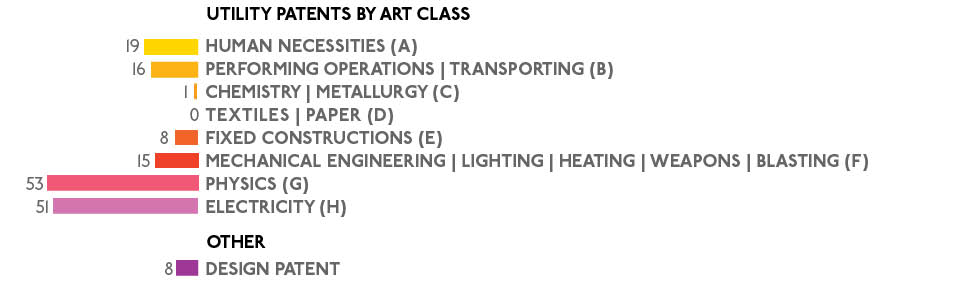
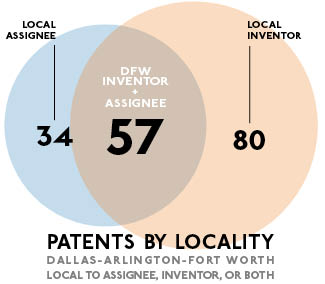



| You are subscribed to email updates from "secure encrypted messaging,best mobile encryption app,what does encrypt sd card storage mean" - Google News. To stop receiving these emails, you may unsubscribe now. | Email delivery powered by Google |
| Google, 1600 Amphitheatre Parkway, Mountain View, CA 94043, United States | |


Comments
Post a Comment